PICTURE THIS:
A Will surfaces years after someone’s death, supposedly signed just weeks before they passed. A contract is produced in court, backdated to lock in a deal that never actually happened. A love letter, a historical manuscript, a signature on a property deed — all of them hinge on one deceptively simple question: When was this actually written?
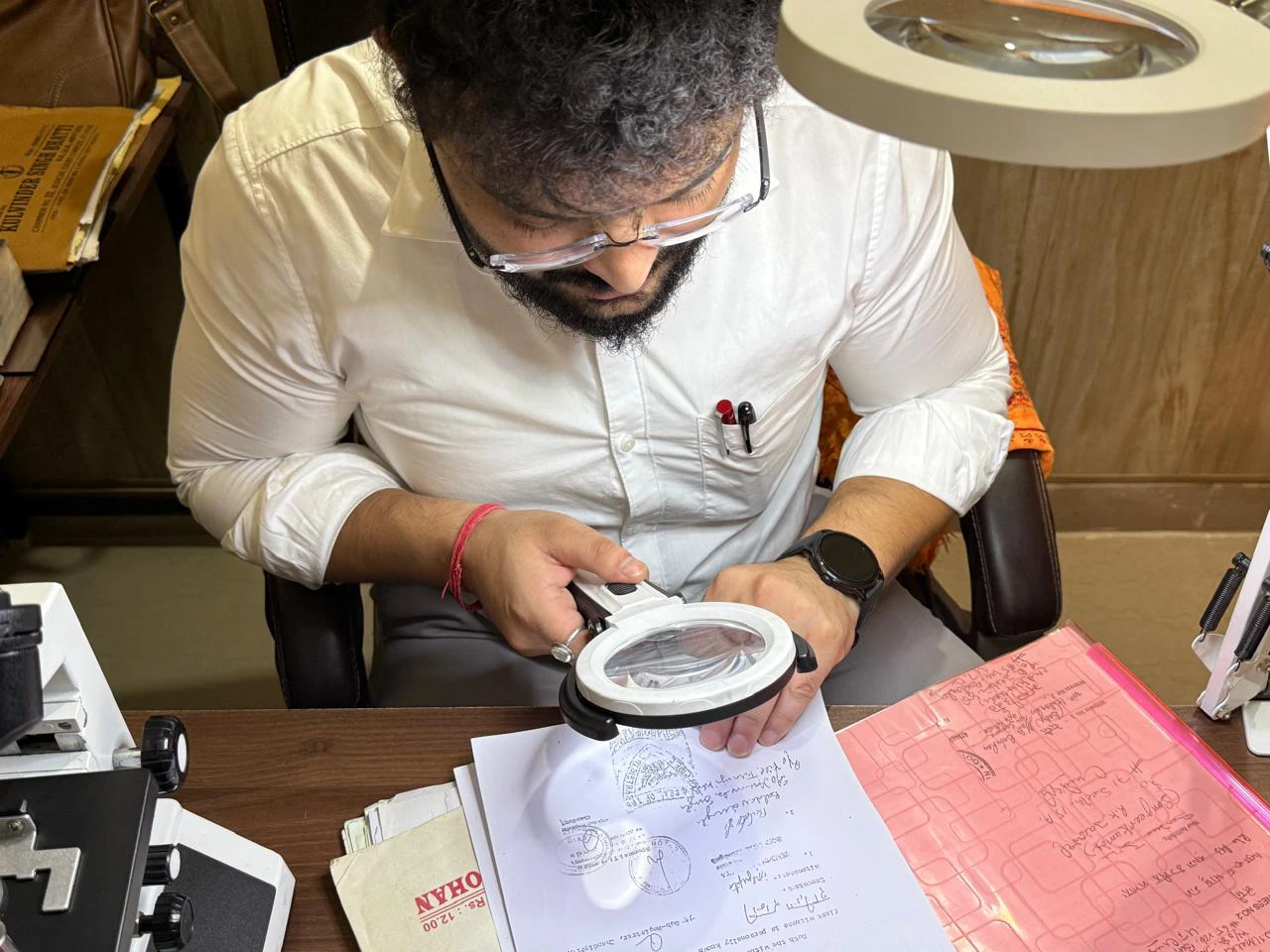
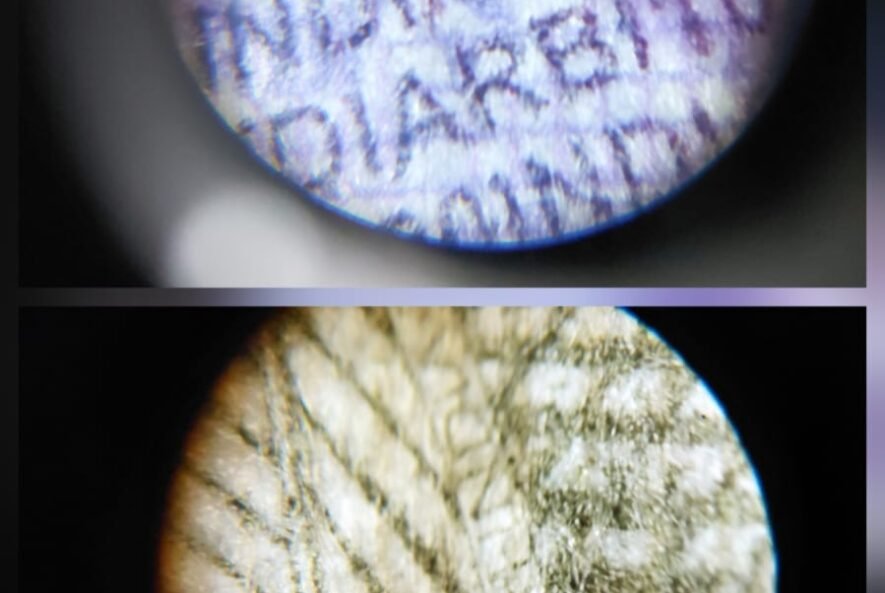
Most people assume ink just “dries” and that’s the end of the story. In reality, ink keeps changing chemically for years after it hits the page — and forensic document examiners have learned to read that slow, invisible aging process like a clock.
THE MYTH OF “DRY” INK:
The moment ink touches paper, it doesn’t simply sit there — it begins a long chemical journey. Solvents evaporate, dye components oxidize, and resins polymerize (harden and cross-link) over time. This means a signature that looks identical to the naked eye at two weeks and at two years is, chemically, a completely different sample.
This is the loophole forgers rarely think about. They can copy a signature’s shape perfectly. They cannot fake its chemical age.
HOW FORENSIC SCIENTISTS ACTUALLY DATE INK?
INK DATING TECHNIQUES:
1. Solvent loss Analysis: Most ballpoint and gel inks contain volatile solvents (like phenoxyethanol) that evaporate at a predictable rate after the ink is applied. By measuring how much solvent remains- typically using Gas Chromatography (GC)- Examiners can estimate how long ago the ink was written. Fresh ink has high solvent content; Ink that’s a decade old has almost none.
2. Dye/component analysis via TLC and HPLC: Most ballpoint and gel inks contain volatile solvents (like phenoxyethanol) that evaporate at a predictable rate after the ink is applied. By measuring how much solvent remains- typically using Gas Chromatography (GC)- Examiners can estimate how long ago the ink was written. Fresh ink has high solvent content; Ink that’s a decade old has almost none. Thin Layer Chromatography (TLC) and High-Performance Liquid Chromatography (HPLC) separate the individual dye components in ink. Manufacturers change their ink formulas over the years — sometimes yearly. If a pen’s formulation was only introduced in 2020, but a document is dated 2015, that’s a red flag no amount of skilled forgery can explain away.
3. Infrared and Raman Spectroscopy: These non-destructive techniques examine how ink absorbs or scatters light, revealing chemical composition without damaging the document. They’re especially useful for comparing whether two inks on the same page — say, the body text and a signature — are actually the same age, which can expose a signature added long after a contract was originally drafted.
4. Indented Writing and Sequencing: Sometimes it’s not about when the ink was made, but in what order it was applied. If a signature crosses over a fold or crease that formed after the ink dried, or sits on top of a printed line rather than under it, that sequencing tells its own story — no chemistry required.
Why This Matters More Than You’d Think?
Ink dating has cracked open real cases:
- Contested wills: Where a “recently added” beneficiary clause turns out to be written in ink that didn’t exist when the will was allegedly signed.
- Insurance fraud: Where backdated documents are meant to make a claim look pre-existing.
- Historical forgeries: It includes infamous cases of fake manuscripts and letters attributed to public figures, unraveled by simple ink chemistry.
The Limits of the Science
Ink dating isn’t magic, and it isn’t always precise to the day. Solvent evaporation rates can vary with storage conditions — heat, humidity, and light exposure all speed up or slow down the aging process. This is why forensic document examiners rarely give a single date; they give a range, backed by multiple techniques cross-checked against each other.
It’s also why courts treat ink dating as one piece of a larger puzzle — paired with paper analysis, handwriting comparison, and contextual evidence — rather than a standalone verdict.
The Takeaway
A forger can master a signature’s shape, pressure, and flow. What they can’t control is the invisible chemistry unfolding in the ink itself, day after day, long after the page has been signed. That’s the quiet advantage forensic science holds — the truth isn’t always in what you can see, but in what’s still slowly changing beneath the surface.
“Forensic ink dating proves that time is an unalterable witness.”