Accurate Transcription. Scientific Voice Examination. Reliable Forensic Findings.
Audio recordings can contain critical evidence in investigations, disputes, legal proceedings, workplace matters, fraud investigations, and other cases. However, understanding what is actually recorded—and determining whether a voice recording has been altered or whether two recordings may involve the same speaker—can require specialist forensic examination.
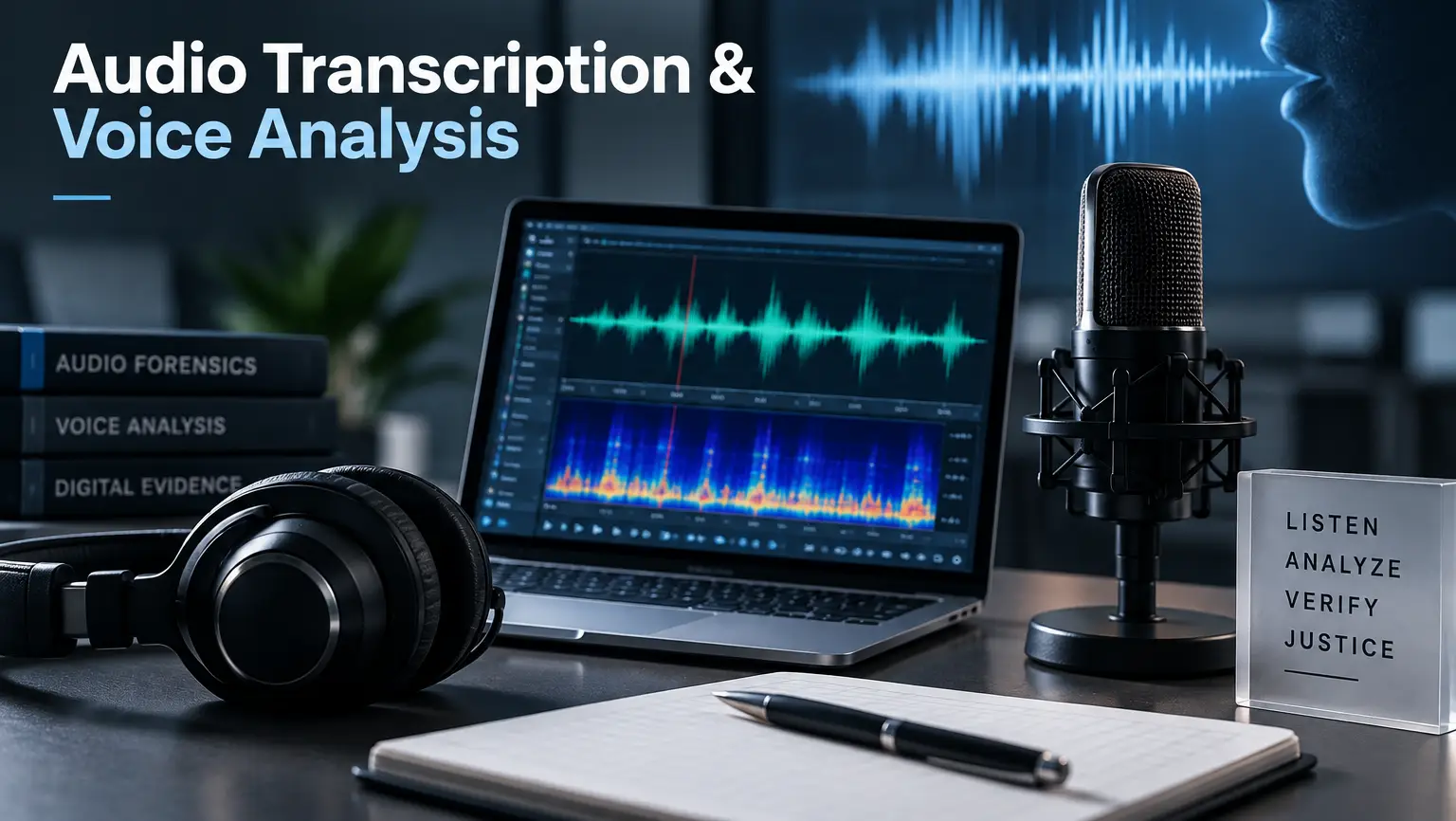
CLARIVUE FORENSICS PRIVATE LIMITED provides professional Audio Transcription & Voice Analysis services to assist clients in extracting, documenting, and evaluating relevant information from audio recordings.
Our approach focuses on careful examination of the available recording, accurate transcription where technically possible, audio enhancement for intelligibility, and forensic voice analysis based on the quality and limitations of the evidence.
Our Audio Transcription & Voice Analysis Services
Routine hematology and coagulation testing is available 24 hours a day, 7 days a week. Additionally, advanced hematological tests are a performed using a variety of techniques including flow cytometry and electrophoresis based methods and are available from Monday to Friday, 7 am – 5 pm.
1
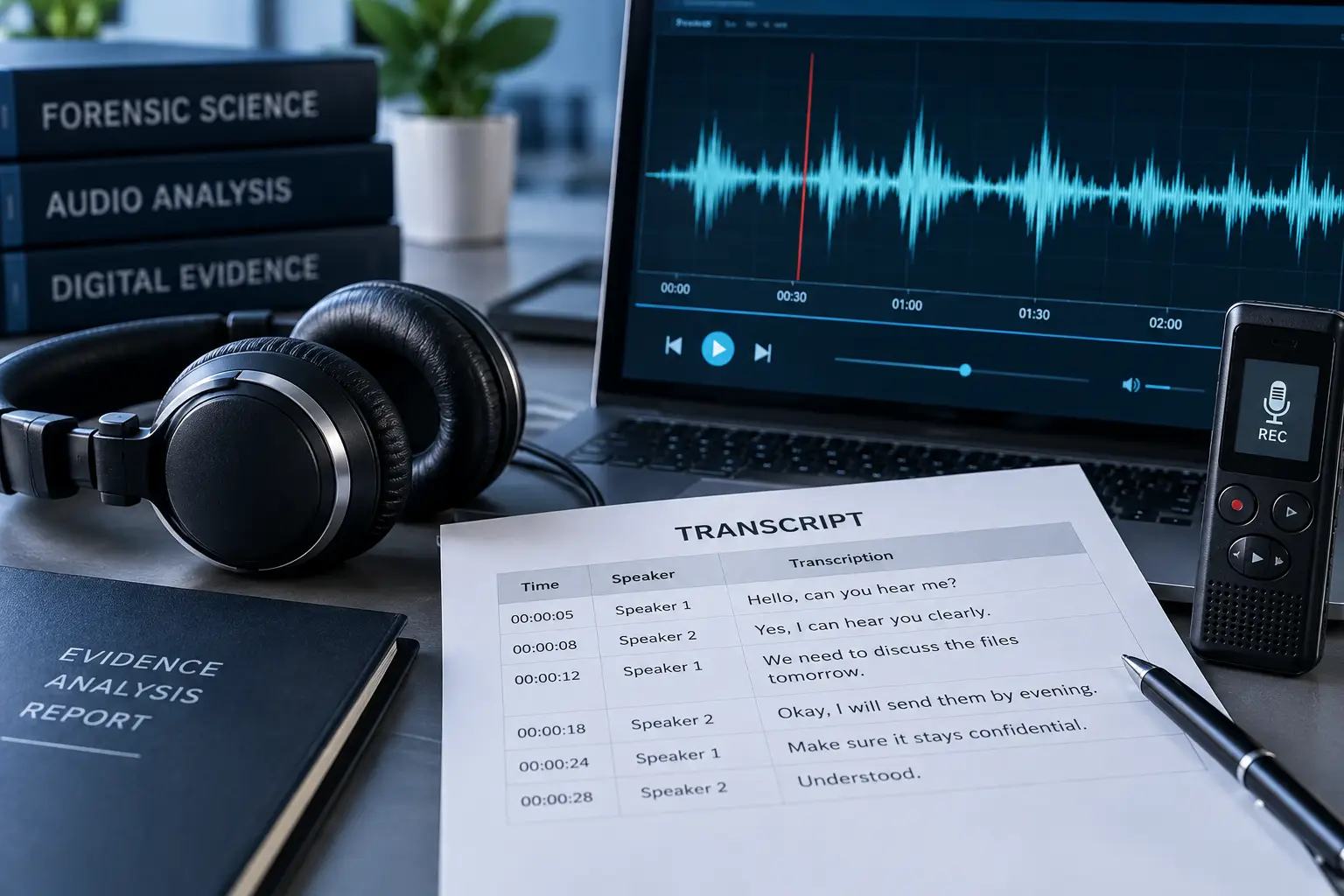
We provide detailed transcription of recorded conversations, interviews, telephone calls, meetings, statements, and other audio material
2
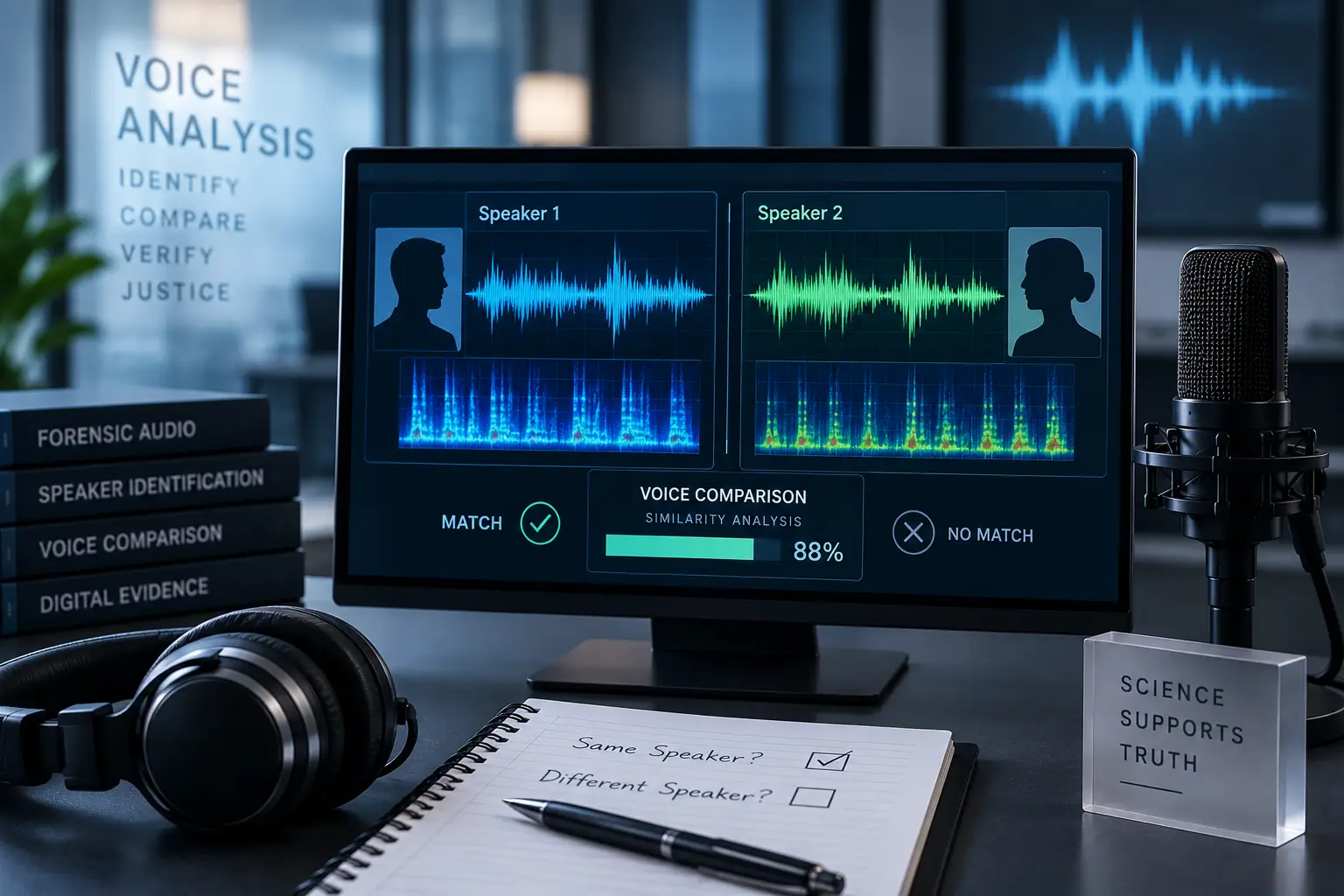
Voice evidence may become relevant when the identity of a speaker is disputed or requires examination.
3
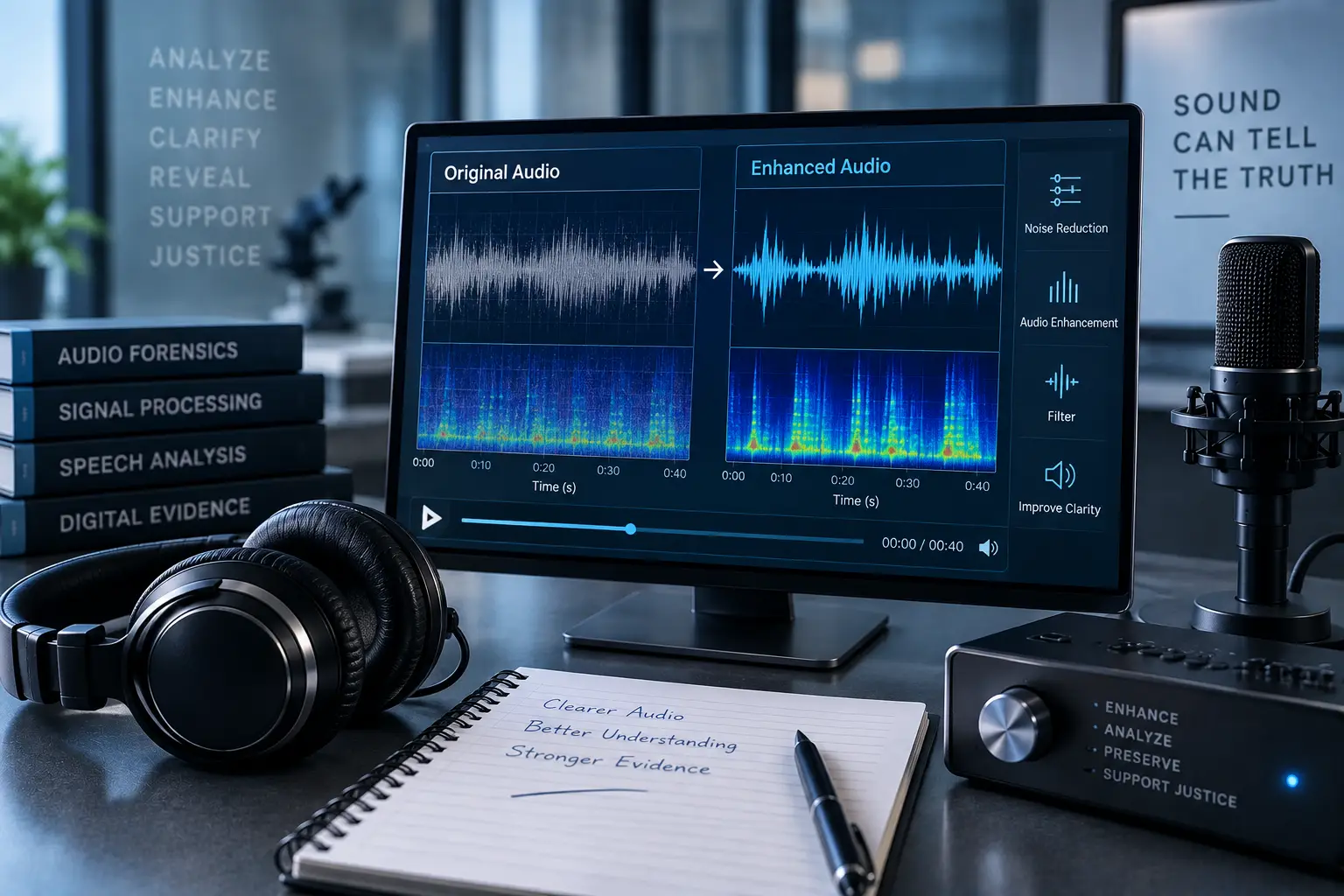
Our audio examination may include appropriate processing techniques intended to improve speech intelligibility while preserving the evidentiary value of the original recording.
4
Recordings containing multiple speakers can present challenges during transcription and examination.
Where technically possible, we assist in separating or distinguishing speakers.
5
Forensic voice analysis involves the examination of speech and voice characteristics present within an audio recording.
6
Questions may arise regarding whether an audio recording is original, altered, edited, or manipulated.
Our forensic audio examination.
WhatWeExamine
Mobile phone recordings
Voice recorder files
CCTV audio
Telephone recordings
WhatsApp audio recordings
Messaging application recordings
Interviews
Meeting recordings
Video files containing audio
Digital voice recordings
Surveillance recordings
Social media audio
Other digital audio files
FrequentlyAskedQuestions
What is forensic audio analysis?
Forensic audio analysis is the scientific examination of audio recordings for investigative or legal purposes. It can include transcription, enhancement, speaker comparison, authenticity-related examination, and other technical analysis.
Can you transcribe unclear audio?
Yes, we can examine and transcribe difficult audio where technically possible. However, portions that cannot be reliably understood may be marked as unclear or unintelligible rather than being guessed.
Can you identify a person from their voice?
Voice comparison may be possible when suitable questioned and known voice recordings are available. The reliability of any comparison depends on factors such as recording quality, speech duration, background noise, channel characteristics, and the suitability of the reference samples.
Can an edited audio recording be detected?
Forensic examination may identify technical indications that are relevant to possible editing or manipulation. However, detection is not guaranteed, particularly when recordings have been compressed, converted, re-recorded, or otherwise altered.
Can WhatsApp audio recordings be examined?
Yes, WhatsApp and other messaging-platform audio files may be examined, subject to the quality and availability of the original file and other relevant evidence.
Should I send the original audio file?
Yes. Whenever possible, preserve and submit the original/native recording. Avoid modifying or repeatedly converting the original evidence.
Can you enhance background noise?
Appropriate audio processing may improve speech intelligibility in some recordings. Enhancement cannot recover information that was never captured by the recording.