Gunshot Residue: How Far Can Forensic Science Really Trace a Shot? Does it really work?
A gunshot doesn't just fire a bullet — it releases a cloud of microscopic particles into the air, onto skin, clothing, and nearby surfaces. This residue, invisible to the naked eye, has become one of forensic science's most powerful — and most misunderstood — tools for reconstructing what happened when a trigger was pulled.
What Gunshot Residue Really Is?
Gunshot Residue (GSR) consists of unburned and partially burned particles from the primer, propellant and cartridge components of ammunition. When a firearm is discharged, this residue is released in several directions, backward toward the shooter’s hand and clothing, forward with the bullet, and outward from the ejection port and muzzle.The particles are typically composed of a mix of lead, barium, and antimony — a combination that's rare enough in most other environments to serve as a strong indicator that a firearm was recently discharged nearby.
How Forensic Scientists Detect and Confirm GSR?
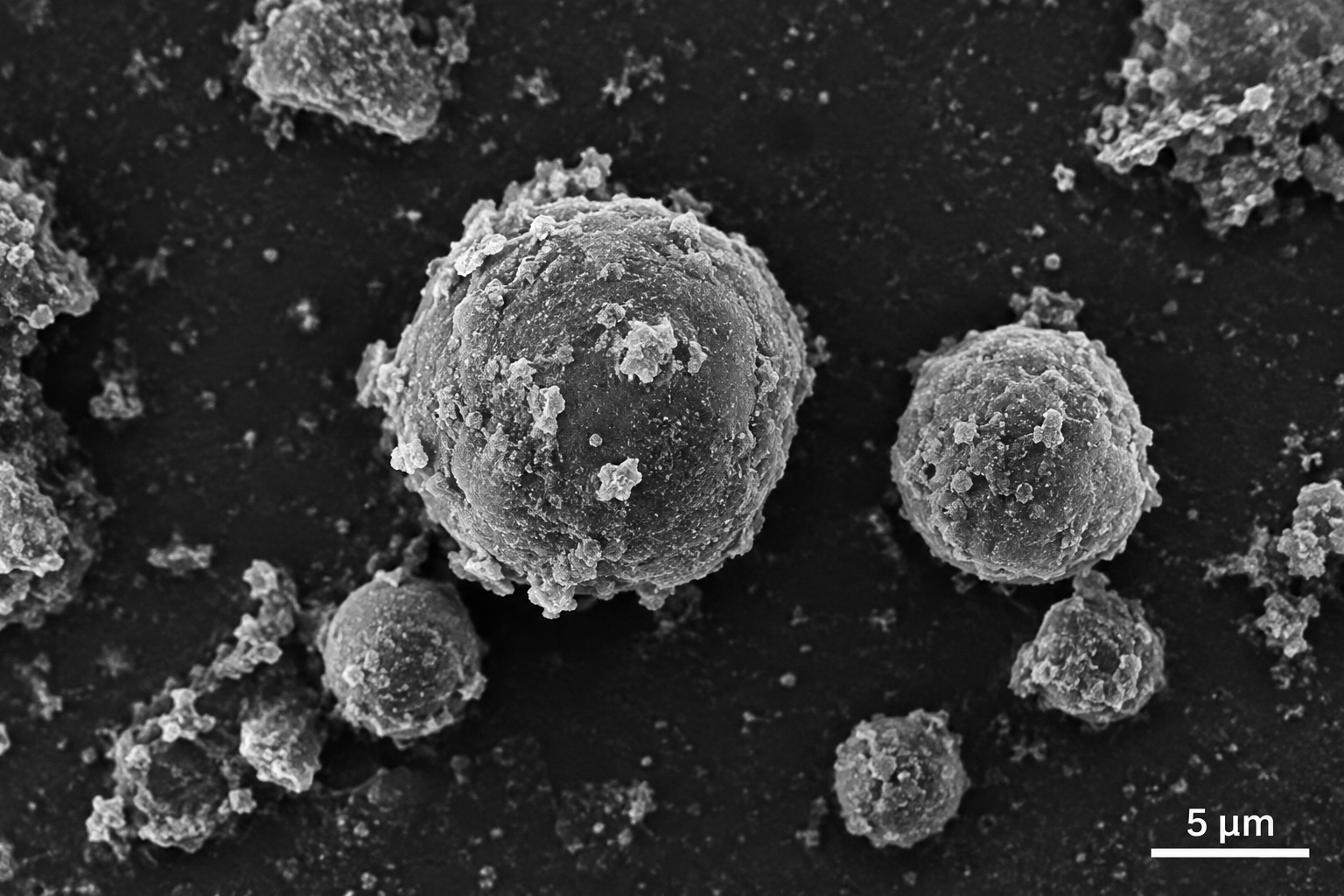
1. Scanning Electron Microscopy (SEM-EDX): This is the gold standard for GSR analysis. Scanning Electron Microscopy combined with Energy Dispersive X-ray Spectroscopy allows examiners to not just detect particles, but examine their shape and elemental composition in detail. GSR particles have a distinctive spherical shape formed by the heat of discharge — a shape that helps distinguish them from lead or barium contamination from unrelated sources.
2. Chemical Swab Testing: Investigators swab a suspect's hands, face, or clothing shortly after a shooting, since GSR particles can be dislodged by simple actions like washing hands, put on gloves, or friction from clothing. This is why timing matters immensely — GSR evidence has a narrow window, often just a few hours, before it becomes unreliable.
3. Distance Determination from Patterns: GSR isn't just about whether someone fired a gun — it can also help determine how far away the shooter was from a target. By test-firing the same weapon and ammunition at various distances and comparing the resulting residue spread pattern on fabric or skin, examiners can estimate the muzzle-to-target distance in an actual shooting, which is often crucial for determining whether a shooting was close-range, at arm's length, or from further away.
Why Is GSR Evidence More Complicated Than It Looks? Contamination Is a Problem?
GSR particles can be transferred secondarily, meaning someone who never fired a gun could test positive just by being near a shooting, riding in a police vehicle that previously transported a firearm or shaking hands with someone who recently fired one. This has made GSR evidence a major point of legal argument, as a positive test does not necessarily mean the person fired the gun.
It Doesn’t Show Who Fired The Fatal Shot- In a situation where there are multiple people , or multiple shots , GSR alone can not usually distinguish between which person fired which shot . It’s most useful for confirming a gun was fired in someone’s vicinity — not necessarily to establish intent or to identify one shooter among many.
Environment & Time Sensitivity- GSR decays rapidly. Rain, wind, activity and time all reduce the amount of residue that can be detected. Outdoor scenes or suspects being apprehended late can mean evidence is gone long before a swab is taken.
Where GSR Fits in a Larger Investigation?
Because of these limitations, GSR is rarely used as standalone proof. It's typically combined with ballistics analysis (matching bullets and casings to a specific firearm), trajectory reconstruction, and witness or video evidence to build a complete picture — rather than relying on residue alone to answer "who did it."
The Takeaway
Gunshot residue offers forensic science something rare: a physical trace of a moment that happens in a fraction of a second and leaves no visible mark. But like most forensic evidence, its power lies in context — how it's collected, how quickly, and what other evidence surrounds it. A positive GSR result isn't a verdict; it's a clue that only means something once it's read alongside everything else at the scene.