Every person carries trillions of microorganisms — bacteria, fungi, and viruses — living on their skin, in their gut, and in their environment. This collection is known as the microbiome, and it turns out these invisible communities may leave behind clues just as revealing as fingerprints or DNA. This is the idea behind Forensic Microbiome Analysis: using the unique bacterial signatures people and places carry to support criminal investigations.
What Is Forensic Microbiome Analysis?
Forensic microbiome analysis is the study of microbial communities — collected from skin, soil, objects, or crime scenes — to help investigators answer questions that traditional forensic evidence sometimes cannot. Instead of only asking “Whose DNA is this?”, investigators can also ask: “What does microbial evidence tell us about where a person has been, what they touched, or how long ago this happened?”
Why Do Microbes Matter in Forensics?
Every person has a surprisingly individual microbial fingerprint. Research suggests that:
Skin microbiomes vary from person to person, and may even help distinguish between individuals almost as reliably as some other biological markers
Microbial traces transfer when people touch objects, surfaces, or each other — similar to how skin cells or hair might transfer at a crime scene.
Soil and environmental microbiomes vary by location, sometimes even down to a specific neighborhood or region, which can help link a person or object to a particular place.
Microbial communities shift after death, following a fairly predictable pattern that scientists can use to estimate time since death.
How Is It Used in Investigations?
- Personal Identification
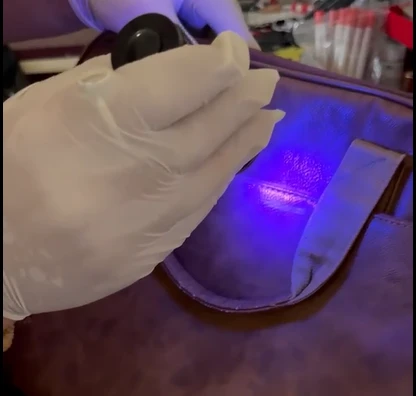
Microbial traces left on frequently touched objects — like keyboards, phones, or door handles — can potentially be matched back to an individual’s own skin microbiome.
- Geolocation Clues:
Because soil and dust microbiomes vary geographically, analyzing microbial residue on shoes, clothing, or vehicles may help narrow down where a suspect or victim has recently been.
- Estimating Time Since Death
As a body decomposes, microbial communities change in a fairly consistent sequence. This “microbial clock” is being studied as a tool to estimate postmortem interval, sometimes more precisely than traditional methods in certain conditions.
- Establishing Contact or Presence
If two people’s microbiomes show unusual overlap, it may support (though not prove) that they were in close contact or shared a space.
Why Does This Matter?
Traditional forensic evidence like DNA or fingerprints isn’t always available — surfaces may be wiped clean, or contact may have been too brief to leave conventional trace evidence. Microbiome analysis offers a potential alternative source of clues in exactly these situations, and could eventually complement existing forensic techniques rather than replace them.
Challenges and Limitations
Forensic microbiome analysis is still a developing science, and several hurdles remain:
Microbiomes change over time — with diet, health, environment, and even the seasons, which complicates using them as a stable identifier.
Contamination is a serious risk, since microbial samples are extremely sensitive to outside interference during collection and analysis, which complicates using them as a stable identifier.
Population reference databases are still limited, making broad, reliable comparisons difficult.
Standardized protocols and legal frameworks are still being developed, so the field hasn’t yet reached the level of validation required for courtroom use in most jurisdictions.
Because of this, most experts currently view microbiome evidence as a supplementary investigative lead rather than standalone proof.
Conclusion
Forensic microbiome analysis reflects a broader shift in forensic science: looking beyond human cells alone to the vast microbial world we constantly carry and leave behind. While it isn’t yet a mainstream courtroom tool, the potential is significant — turning invisible bacterial traces into a new category of forensic evidence.
The question investigators may increasingly ask isn’t just “What DNA was left behind?”