
“Every contact leaves a trace.” — Dr. Edmond Locard, Forensic Science Pioneer
Forensic Investigative Genetic Genealogy (FIGG) is a groundbreaking law enforcement tool that combines advanced DNA sequencing with traditional genealogical research to generate leads for unsolved violent crimes and identify unknown human remains.
What is FIGG?
Forensic Investigative Genetic Genealogy (FIGG), often simply called Investigative Genetic Genealogy (IGG), is a groundbreaking technique that combines DNA analysis with traditional genealogical research to help solve criminal cases. Instead of relying only on a direct match in a criminal DNA database, FIGG uses genetic data to trace family trees and identify potential suspects or victims through their relatives — even distant ones. This method became widely known after it helped identify the Golden State Killer in 2018, a case that had remained unsolved for over four decades. Since then, FIGG has been used in hundreds of cold cases worldwide, turning genetic breadcrumbs into solid investigative leads. At its core, FIGG works on a simple idea: even if a criminal has never submitted their own DNA anywhere, a distant relative might have—and that connection can be enough to narrow a suspect pool from millions of people to just a handful.
How Does FIGG Work?
The FIGG process typically unfolds in a series of connected steps:
- DNA is Obtained
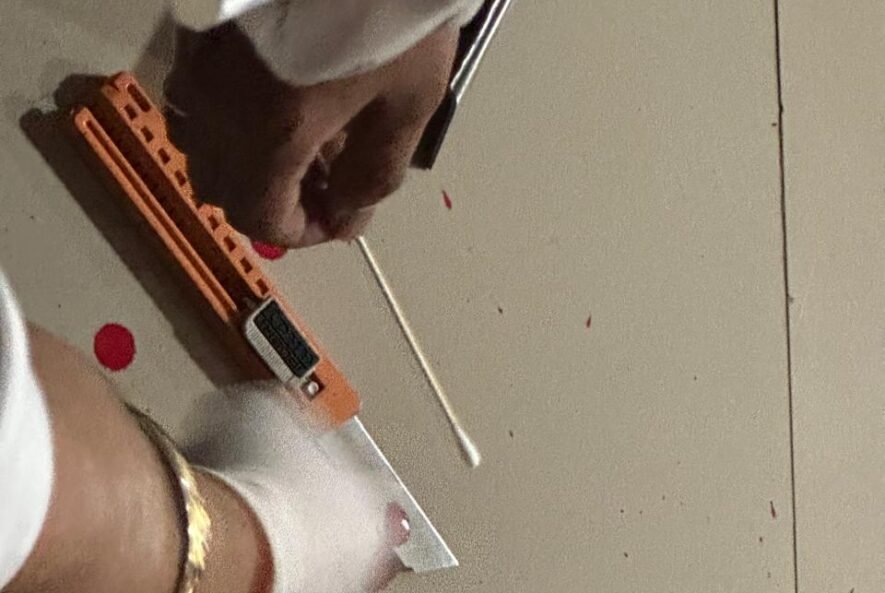
Investigators collect DNA evidence from a crime scene — this could be blood, hair, skin cells, or other biological material left behind by an unknown suspect, or biological remains used to identify an unknown victim.
- A Genetic Profile is Developed
The crime scene DNA sample is processed using specialized techniques (usually SNP-based genotyping, which is different from the STR profiling used in standard criminal databases) to create a detailed genetic profile suitable for genealogical comparison.
- Potential Relatives Are Identified
This genetic profile is uploaded to genetic genealogy databases — such as GED match or Family Tree DNA — that allow law enforcement searches. The system compares the profile against millions of user-submitted DNA samples to find people who share DNA segments with the unknown individual, indicating a familial relationship.
- A Family Tree is Constructed
Then work backward with these DNA matches, using public records, obituaries, census data, and other genealogical resources to build out family trees, tracing common ancestors and mapping how different matches are related to one another.
- Investigative Information is Combined
The family tree is cross-referenced with case details — geographic location, age, physical description, and timeline — to narrow the list of possible candidates down to one or a few individuals who fit the profile of the suspect or victim.
- Forensic DNA Confirmation
Once a strong candidate emerges, investigators obtain a direct DNA sample from that individual (often through discreet surveillance methods like discarded items) and confirm the match using traditional forensic DNA analysis before making an arrest or identification.
Why is FIGG Important?
FIGG has transformed the landscape of criminal investigation, particularly for cold cases that have been unsolved for decades. Its importance lies in several key areas:
- Solving Cold Cases: Many cases that had gone cold due to a lack of direct DNA matches have been reopened and solved using FIGG.
- Identifying Unknown Victims: Beyond catching perpetrators, FIGG has been used to give names to unidentified human remains, bringing closure to families.
- Expanding the Reach of DNA Evidence: Traditional DNA databases only help when a suspect’s DNA is already on file. FIGG extends this reach through family connections, dramatically increasing the odds of identification.
- Deterrent Effect: The knowledge that genetic connections — even distant ones — can lead investigators to a suspect adds a new layer of accountability.
The science behind it
FIGG relies on principles from population genetics and molecular biology. Unlike standard forensic DNA profiling, which examines a limited number of specific genetic markers (STRs) primarily used for direct matching, FIGG uses Single Nucleotide Polymorphism (SNP) analysis — the same technology used by consumer DNA testing companies. SNP profiles capture hundreds of thousands of genetic markers across the genome, allowing scientists to detect shared DNA segments between individuals who may be as distantly related as third or fourth cousins. The amount and length of shared DNA segments help genealogists estimate how closely two people are related, which is essential for accurately reconstructing a family tree.
Challenges and Ethical concerns
Despite its investigative power, FIGG raises significant ethical and legal questions:
- Privacy Concerns: Many people who upload their DNA to genealogy databases for personal ancestry research never anticipated it being used in criminal investigations, raising questions of informed consent.
- Genetic Surveillance of Relatives: FIGG effectively implicates entire family networks in investigations, even though those relatives have committed no crime and may not have consented to their DNA being searched.
- Data Security: Genetic data is deeply personal and permanent — a data breach involving such information could have far-reaching consequences.
- Regulatory Gaps: Laws governing the use of FIGG vary widely by country and even by state, leading to inconsistent standards for how and when it can be used.
- Potential for Misidentification: While rare, errors in genealogical tracing or DNA interpretation could implicate innocent people, making rigorous verification essential.
Conclusion
Forensic Investigative Genetic Genealogy represents one of the most significant advances in criminal investigation in recent memory. By connecting the dots between crime scene DNA and vast genealogical networks, it has brought resolution to cases once thought unsolvable and given names back to those who had none. Yet, as with any powerful tool, FIGG comes with responsibility. Striking the right balance between solving crimes and protecting individual privacy will determine how this technology is used — and trusted — in the years to come.
“Justice delayed is justice denied — but science, given time, can still deliver it.”