
“THE NIRBHAYA CASE: A FORENSIC INVESTIGATION FROM CRIME SCENE TO COURTROOM”
INTRODUCTION
BACKGROUND
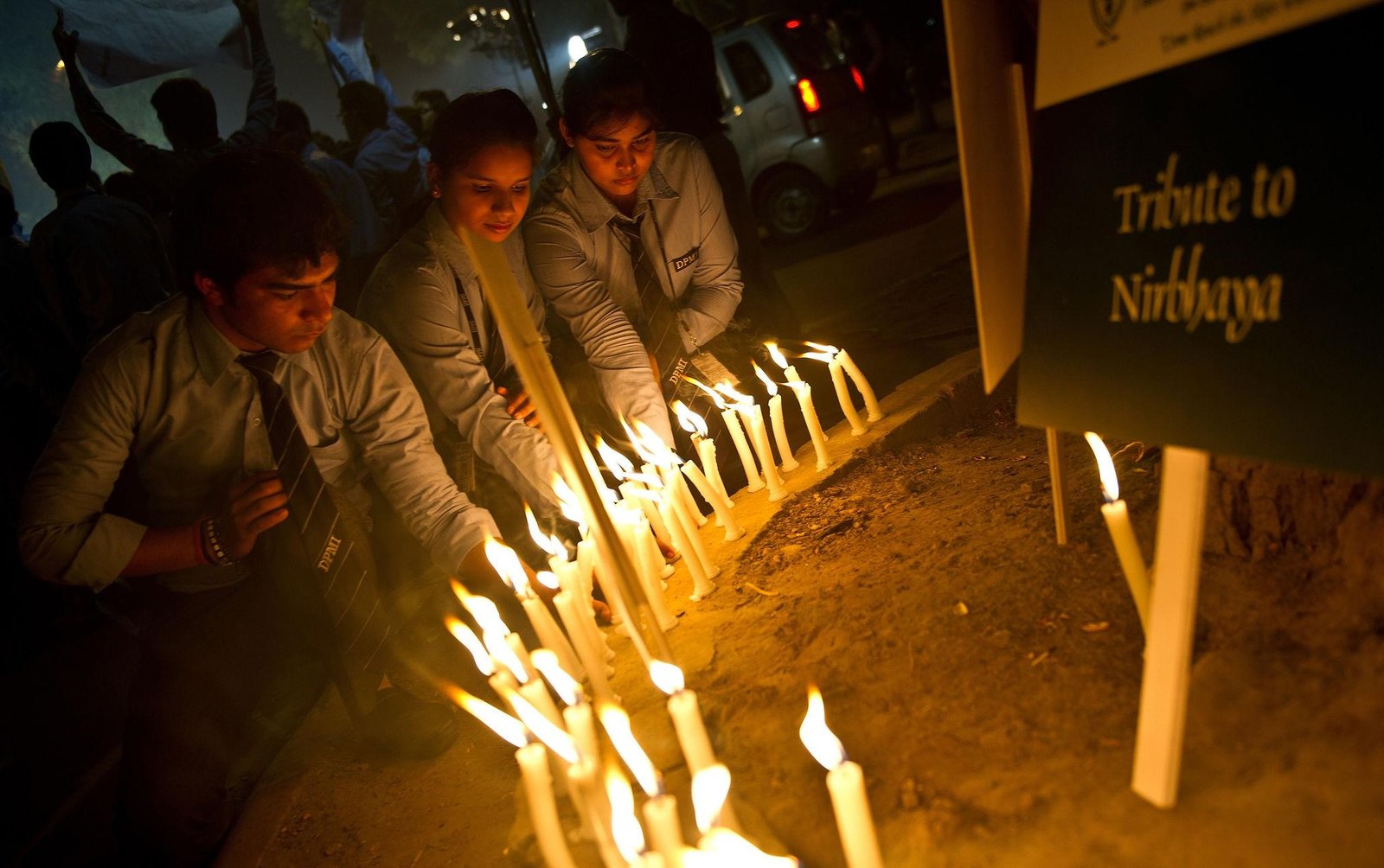
The 2012 Delhi gangrape and murder, known as the Nirbhaya case, is one of the most widely known criminal cases in modern Indian history. Apart from its social and legal impact, the case is also significant from a forensic science perspective because the investigation involved biological evidence, DNA profiling, medical examination, fingerprint evidence, crime-scene investigation, and other forms of corroborative evidence.The victim, a 23-year-old paramedical student, was publicly identified by the name “Nirbhaya.” The incident took place in New Delhi on the night of 16 December 2012.
On the evening of 16 December 2012, Nirbhaya and her male friend went to watch a movie in Delhi. Later that night, they travelled towards Munirka bus stand and boarded a white private bus.According to the prosecution case and the evidence discussed by the Supreme Court, the passengers on the bus attacked the two. Both victims were later found in an injured condition and were taken for medical treatment.Nirbhaya was initially treated in Delhi. Because of the seriousness of her condition, she was later transferred to Mount Elizabeth Hospital in Singapore. Despite medical treatment, she died on 29 December 2012.The incident led to a major criminal investigation, followed by trial proceedings against the accused.
Investigation and Evidence Collection
1. Biological and DNA Evidence: DNA profiling was one of the important scientific components of the investigation. Biological samples obtained during the investigation were examined by forensic laboratories and compared with reference samples.DNA analysis helped investigators establish associations between biological material and the individuals involved in the case. The forensic DNA reports were later considered by the courts along with the other evidence.
2. Medical Evidence: Medical examinations were conducted after the victims were taken to hospital. The medical findings documented the injuries and other relevant observations.The medical evidence was important in reconstructing the circumstances of the incident and was considered together with the forensic laboratory findings and other evidence.
3. Examination of the Bus: The bus in which the incident occurred became an important crime scene. Forensic experts examined the vehicle and collected relevant exhibits.The investigation also included the examination and lifting of chance fingerprints from the bus. These were subsequently compared with prints obtained from the accused.
4. Fingerprint and Impression Evidence: Fingerprint examination provided another method of connecting individuals with the crime scene. Investigators obtained fingerprints and other impressions from the accused for comparison with the material recovered during the investigation.This demonstrates the importance of combining different forensic techniques rather than depending on a single type of evidence.
5. Other Physical Evidence: Clothing and other exhibits connected with the incident were collected, preserved and sent for forensic examination. Such exhibits can provide biological or trace evidence and can help establish associations between a victim, suspect and crime scene.
Trial and Court Proceedings
Forensic Significance of the Case
The trial court convicted the four adult accused on 10 September 2013. The court imposed the death penalty shortly afterwards.The Delhi High Court confirmed the convictions and death sentences on 13 March 2014.The case then reached the Supreme Court of India. On 5 May 2017, the Supreme Court in Mukesh & Anr. v. State (NCT of Delhi) & Ors. upheld the convictions and death sentences of the four adult accused.
The Court considered the prosecution evidence as a whole, including eyewitness testimony, medical evidence, forensic evidence, and other circumstances established during the investigation.The Supreme Court treated the case as falling within the established “rarest of rare” category for awarding the death penalty.After subsequent legal proceedings, the four adult convicts were executed on 20 March 2020.
The Nirbhaya case is important for forensic science because it demonstrates how different scientific disciplines can contribute to one criminal investigation. The major forensic lessons from the case include:
DNA profiling can provide powerful biological evidence for establishing associations between individuals and evidence.
Fingerprint examination can assist in connecting a person with a particular object or location.
Medical examination provides scientific documentation of injuries and other findings.
Crime-scene examination is essential for identifying, documenting, and preserving evidence.
Proper evidence handling and chain of custody are necessary to maintain the reliability and integrity of exhibits.
A strong forensic investigation generally depends on the combined interpretation of multiple types of evidence, rather than relying on one forensic technique alone.