Need Help? Book Appoinment


Fingerprint Development & Analysis
- Home
- Fingerprint Development & Analysis
Fingerprint Development & Analysis Services in India
Professional Fingerprint Examination & Forensic Analysis
Fingerprints can provide valuable investigative information when they are properly developed, documented, collected, preserved, and examined. At Clarivue Forensics Private Limited, we provide professional fingerprint development and analysis services to support investigations involving crime scenes, disputed impressions, unidentified fingerprints, and other matters where fingerprint evidence may be relevant.
Our forensic professionals assist with the development and recovery of latent fingerprints, documentation of recovered impressions, preservation of fingerprint evidence, and comparison of recovered impressions with suitable known fingerprint standards.
A fingerprint may appear invisible to the naked eye, but appropriate forensic examination can help determine whether a usable impression is present and whether it contains sufficient ridge detail for comparison.
Fingerprint Development & Analysis
Fingerprint evidence is one of the important forms of physical evidence encountered during forensic investigations. Fingerprints may be deposited on surfaces when a person touches an object, depending on the nature of the surface, environmental conditions, and other circumstances.
Our fingerprint examination services focus on the scientific handling and evaluation of fingerprint evidence. The examination may involve assessing the recovered impression, documenting its condition, evaluating the quality of ridge detail, and comparing suitable impressions with known standards where available.
The purpose of fingerprint analysis is not simply to identify a pattern visually. A professional examination considers the quality, clarity, continuity, and individual ridge characteristics that may be available within an impression.
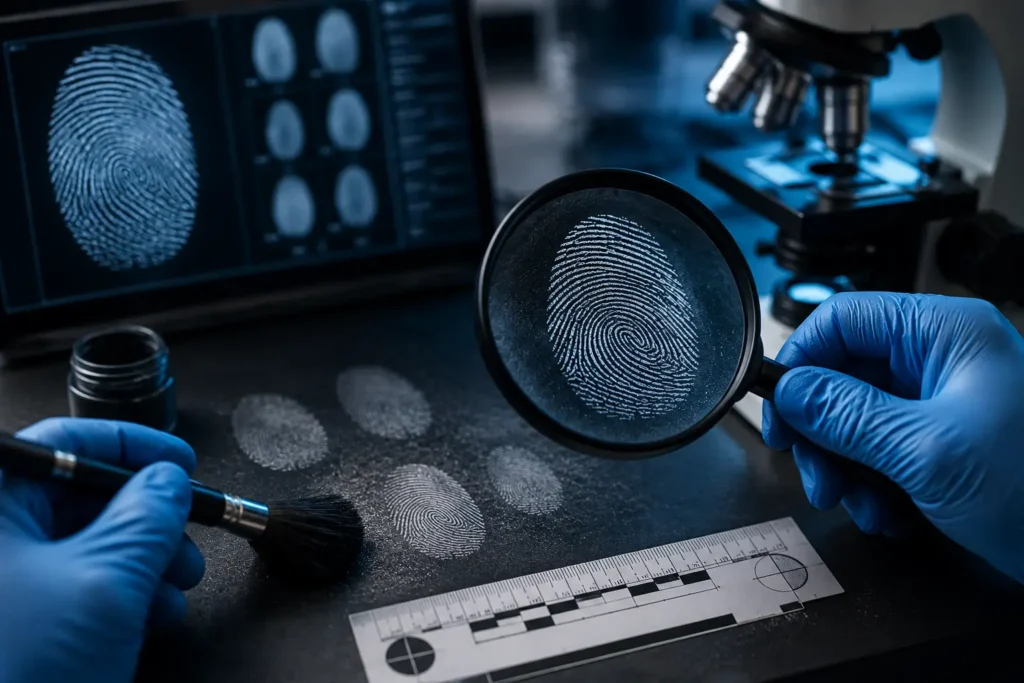
Our Fingerprint Forensic Services
Latent Fingerprint Development
Latent fingerprints are impressions that are not readily visible under normal viewing conditions. Depending on the surface and circumstances, specialized forensic development techniques may be considered to make potentially useful ridge detail visible.
Our forensic professionals can assist with the examination and development of latent fingerprint evidence from appropriate surfaces and submitted materials.
Fingerprint Evidence Documentation
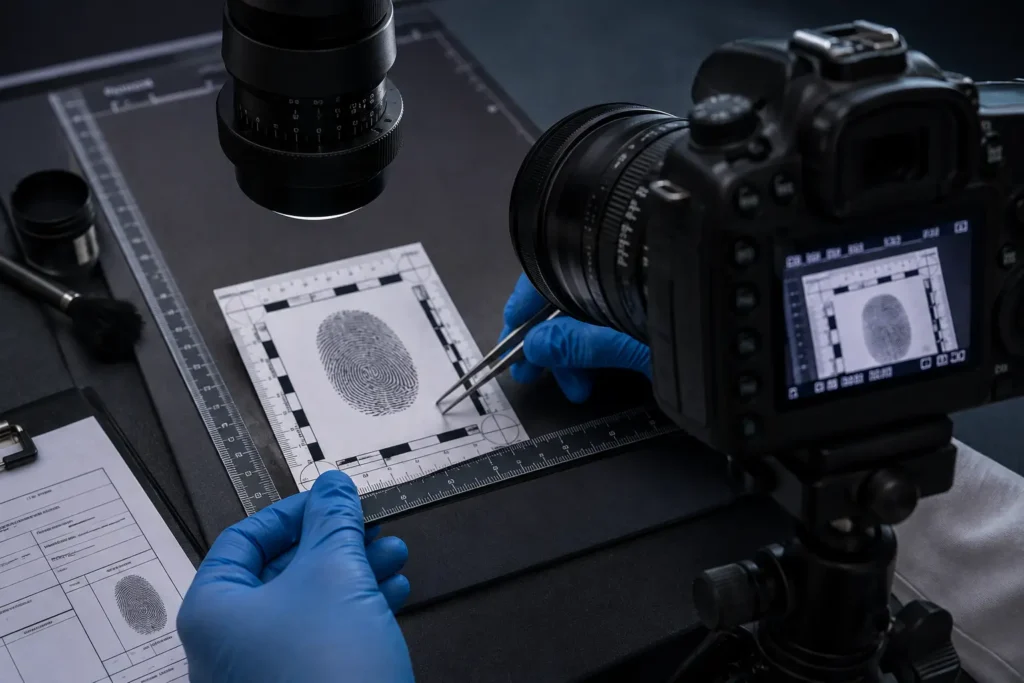
Proper documentation is an important part of fingerprint examination. Developed or recovered impressions may be documented through appropriate forensic photography and examination records before further processing or comparison.
Documentation helps preserve information about the condition and appearance of the evidence at the relevant stage of examination.
Fingerprint Collection & Preservation
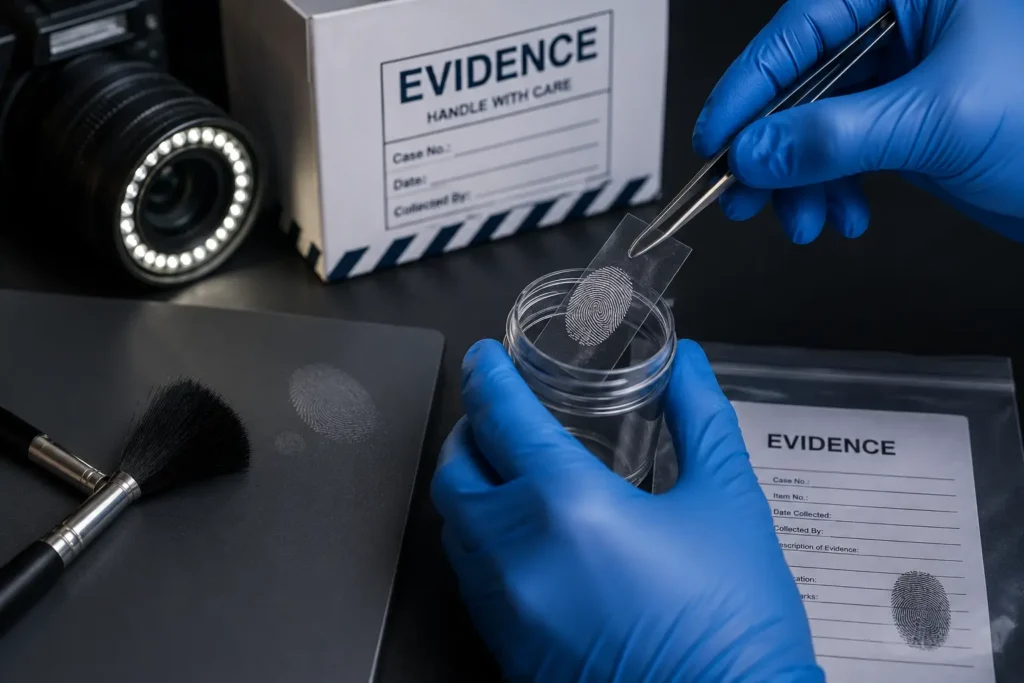
Fingerprint evidence needs to be handled carefully to reduce the possibility of contamination, loss, or alteration. Our forensic approach emphasizes appropriate evidence handling, documentation, and preservation considerations throughout the examination process.
Where fingerprint impressions have already been recovered from a crime scene or object, we can also assist in evaluating the available material for further examination.
Fingerprint Comparison & Examination
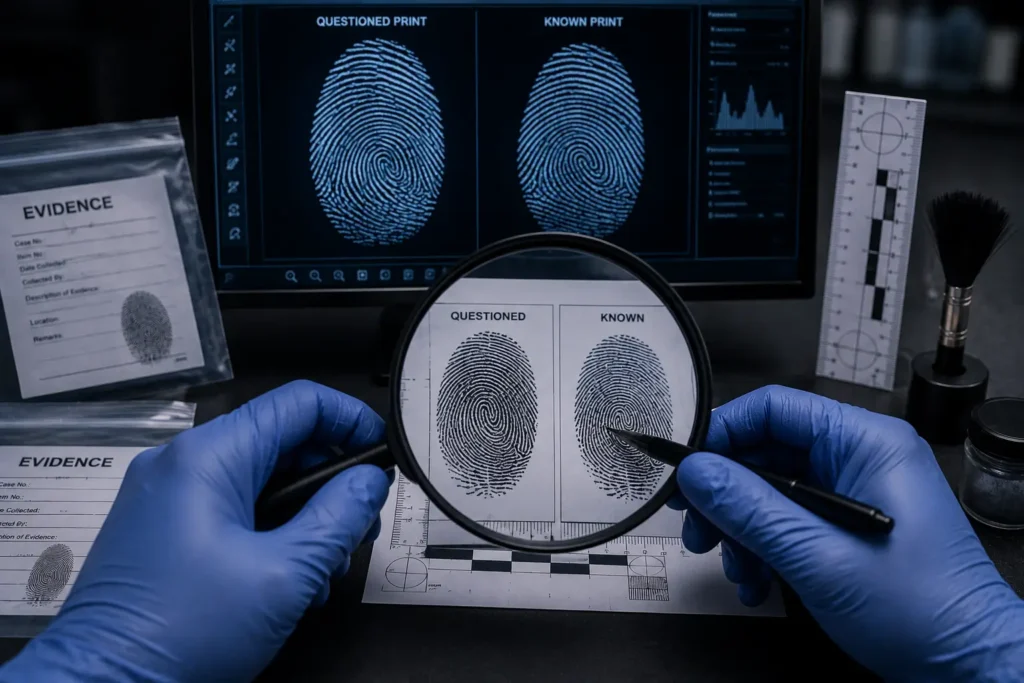
Recovered fingerprint impressions may be compared against known fingerprint standards when suitable standards are available.
The comparison process involves examining the available ridge characteristics and determining whether the questioned and known impressions contain sufficient comparable information for an appropriate forensic conclusion.
Crime Scene Fingerprint Support
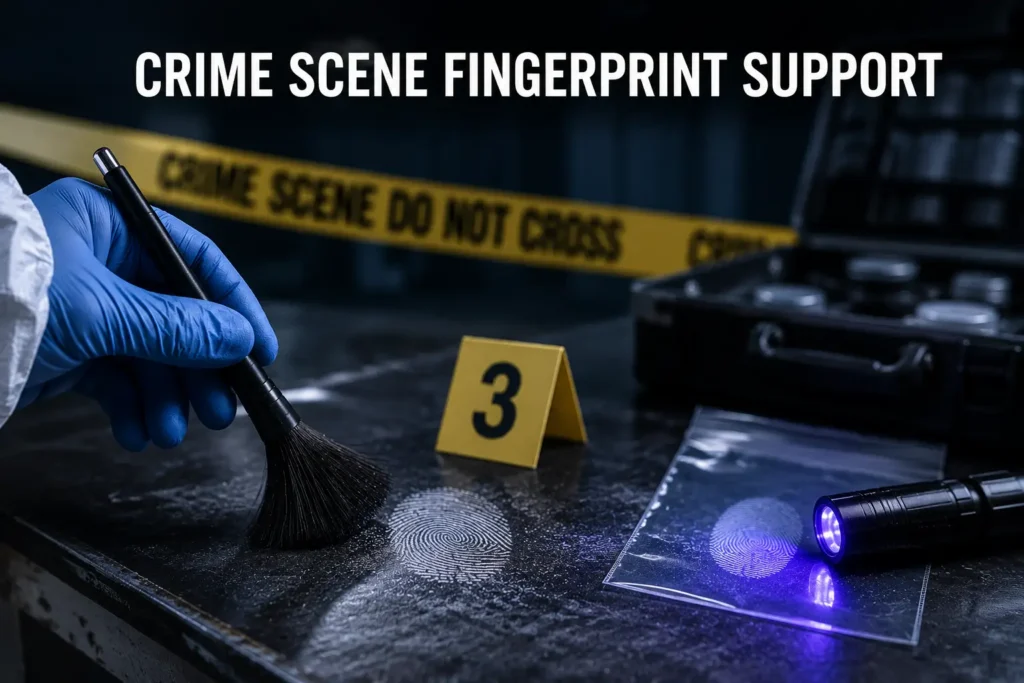
Fingerprint evidence can be particularly relevant during crime scene investigations involving theft, burglary, robbery, assault, property damage, and unauthorized access.
Our forensic professionals can provide technical support relating to fingerprint evidence recovered during an investigation and help assess the suitability of available impressions for examination.
Examination of Recovered Fingerprint Impressions
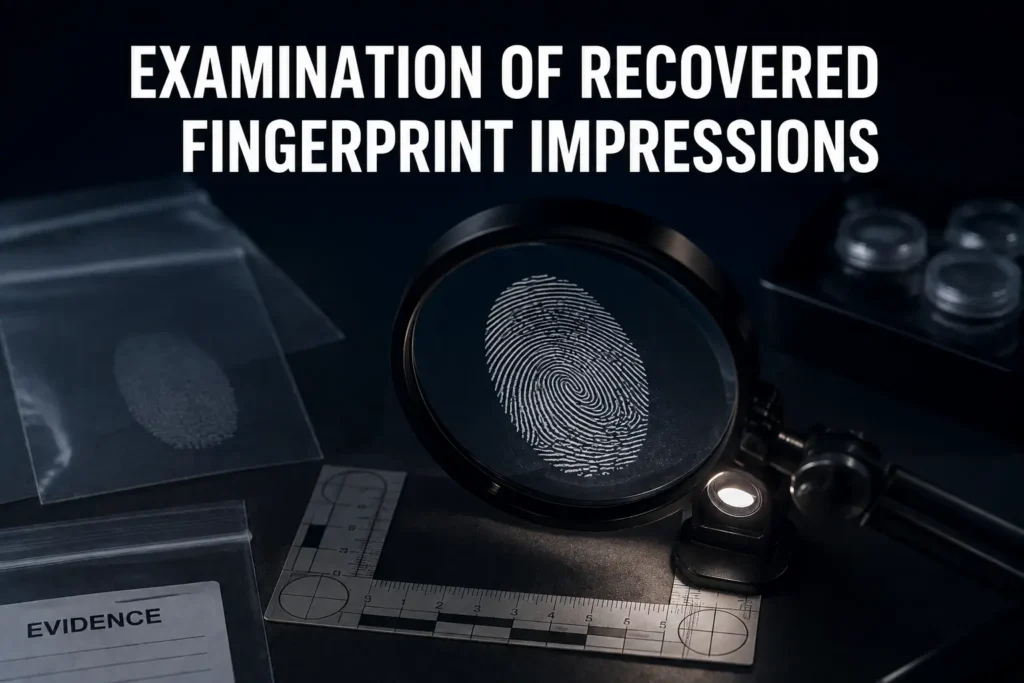
Fingerprints recovered from objects, photographs, documents, surfaces, or other submitted materials can be examined to determine whether they contain sufficient ridge detail for meaningful comparison.
The condition and quality of the submitted evidence can significantly influence the examination process and the conclusions that can be reached.
Our Fingerprint Development & Analysis Process
Every fingerprint examination is different because the nature of the evidence, surface, condition, and circumstances can vary from case to case. Our process is therefore adapted according to the available evidence and the requirements of the investigation.
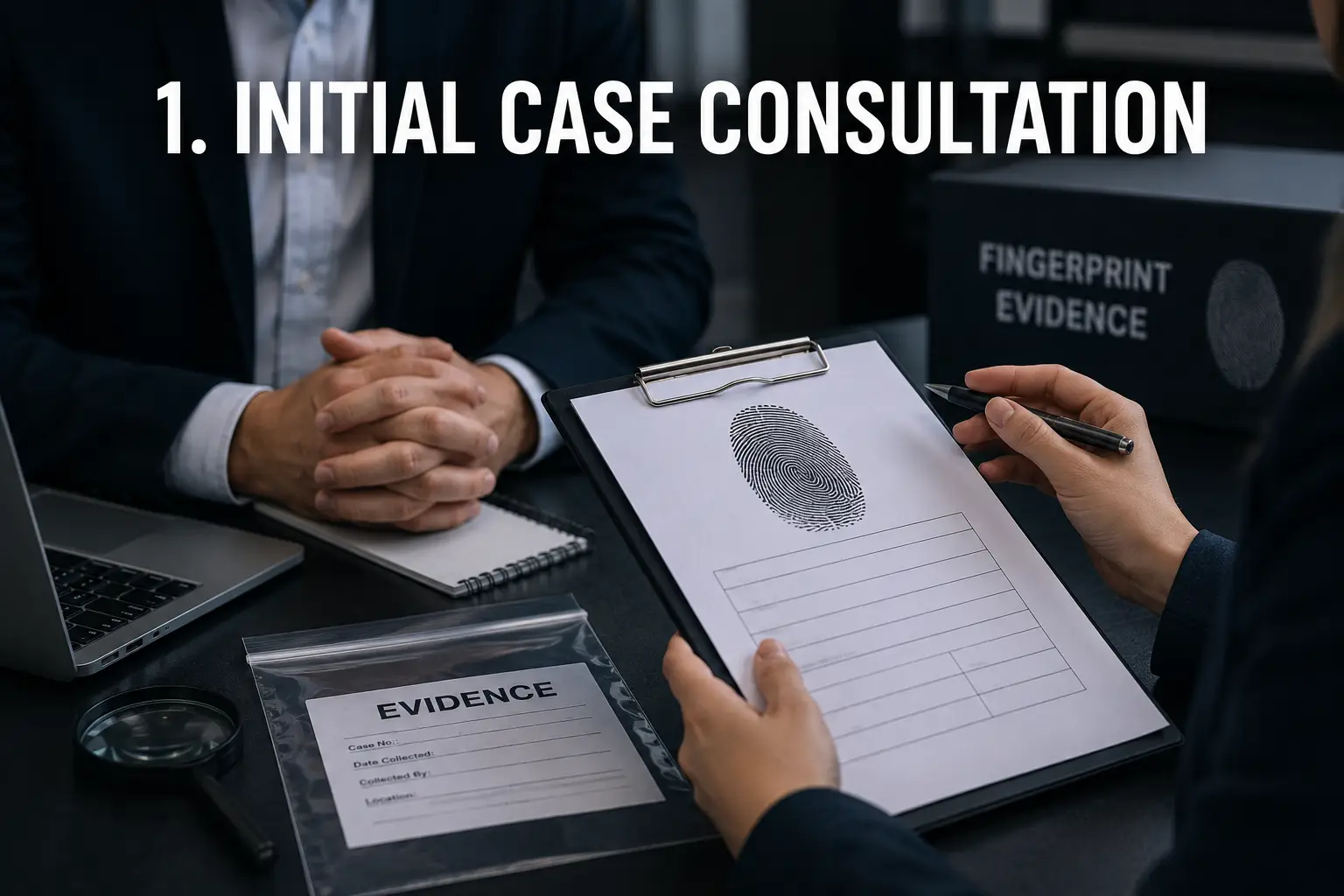
1. Initial Case Consultation
The process begins with understanding the circumstances surrounding the fingerprint evidence. We may review information regarding where the fingerprint was recovered, what type of material or surface is involved, when it was discovered, how it was collected, and whether known fingerprint standards are available.
This initial assessment helps determine the appropriate forensic approach.
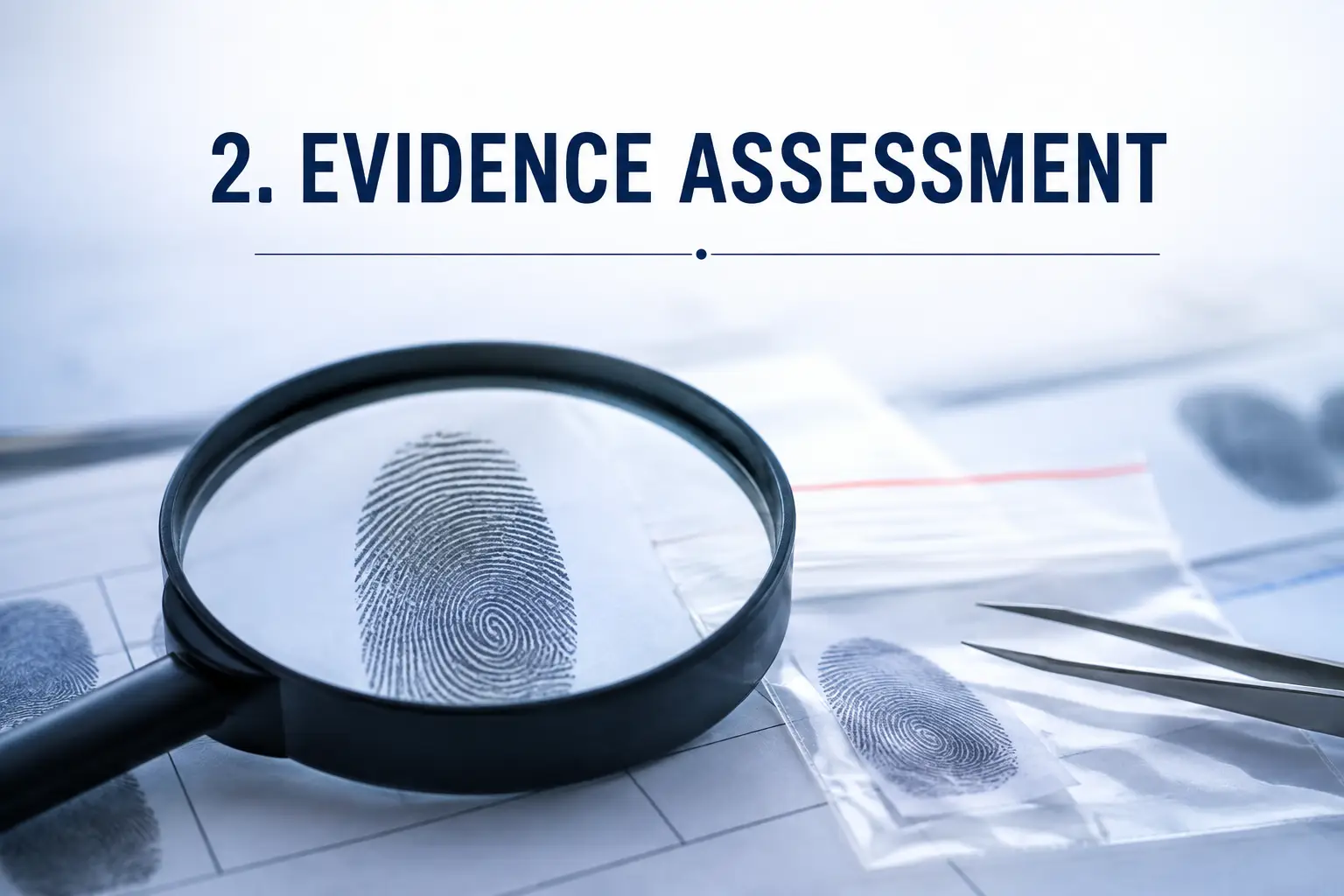
2. Evidence Assessment
The submitted evidence is reviewed to understand its condition and suitability for fingerprint examination. Where photographs or previously recovered impressions are provided, their quality and available ridge detail may also be assessed.
Not every fingerprint impression contains enough information for a reliable comparison, so an initial evaluation can be important.
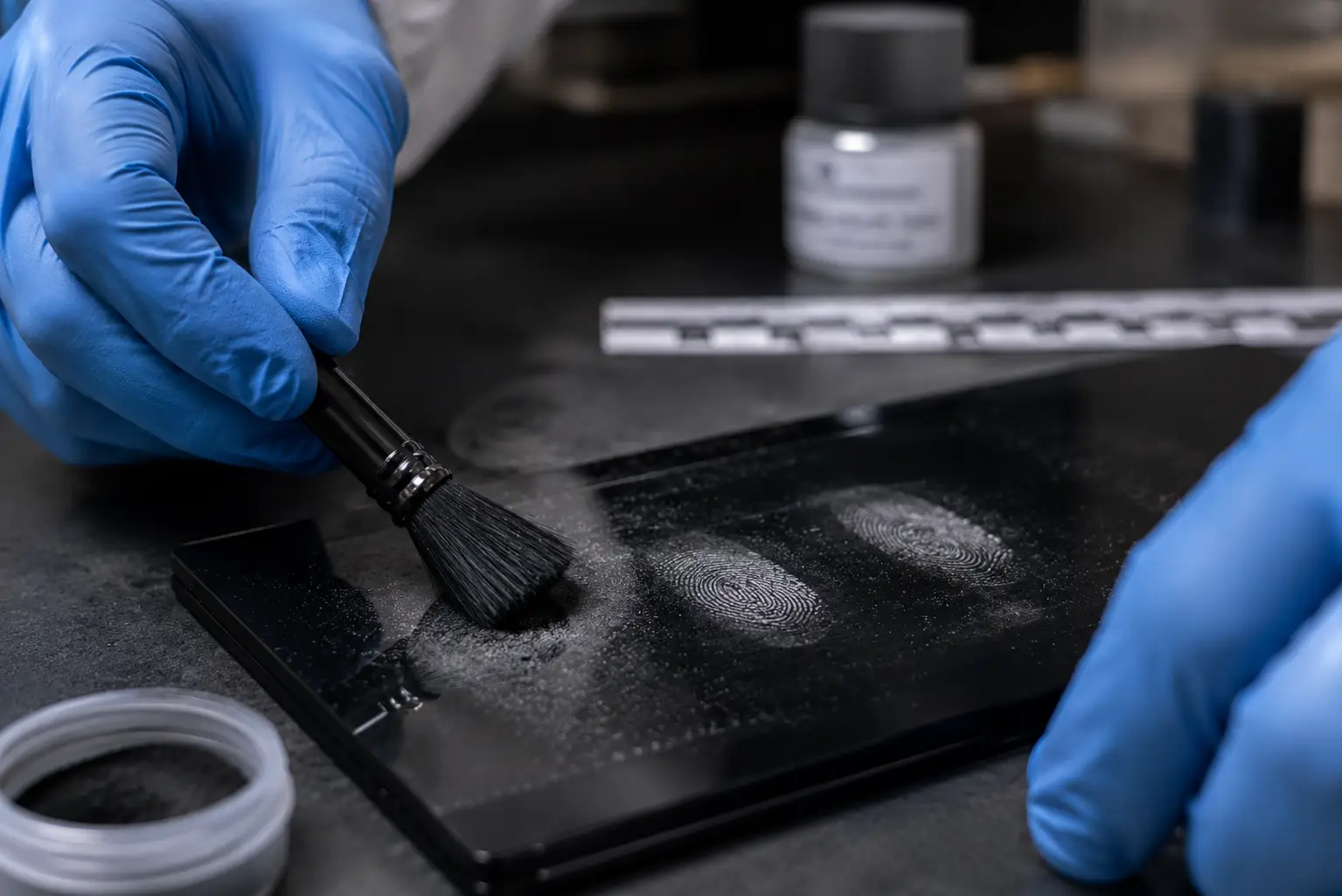
3. Fingerprint Development
Where appropriate and technically feasible, suitable forensic development methods may be considered based on the nature of the surface and evidence.
The objective is to reveal potentially useful ridge detail while maintaining appropriate documentation and evidence-handling practices.
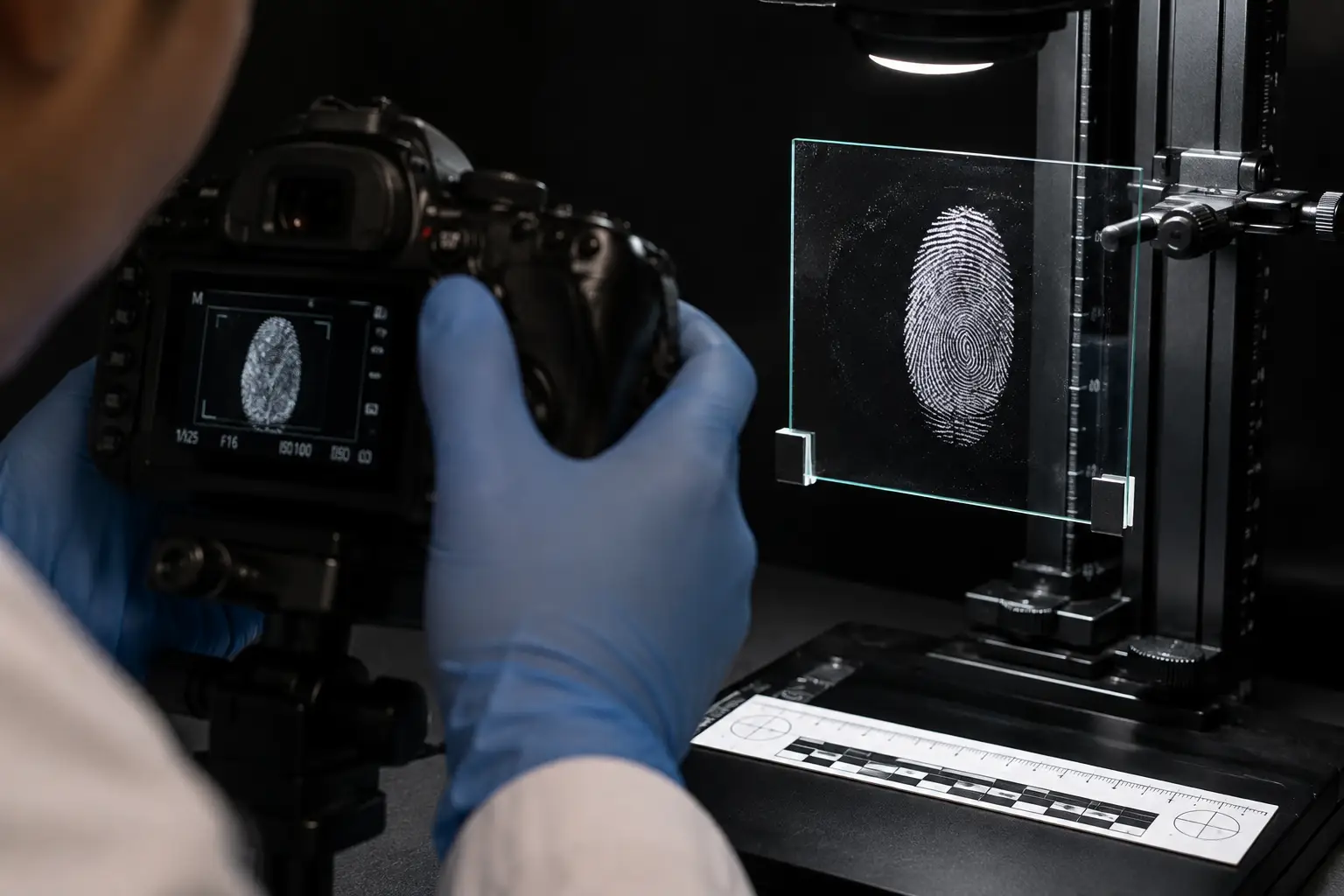
4. Documentation & Photography
Developed or recovered impressions may be documented using appropriate forensic photography and examination procedures.
Clear documentation helps preserve the visual information available in the impression and provides a record for subsequent examination.
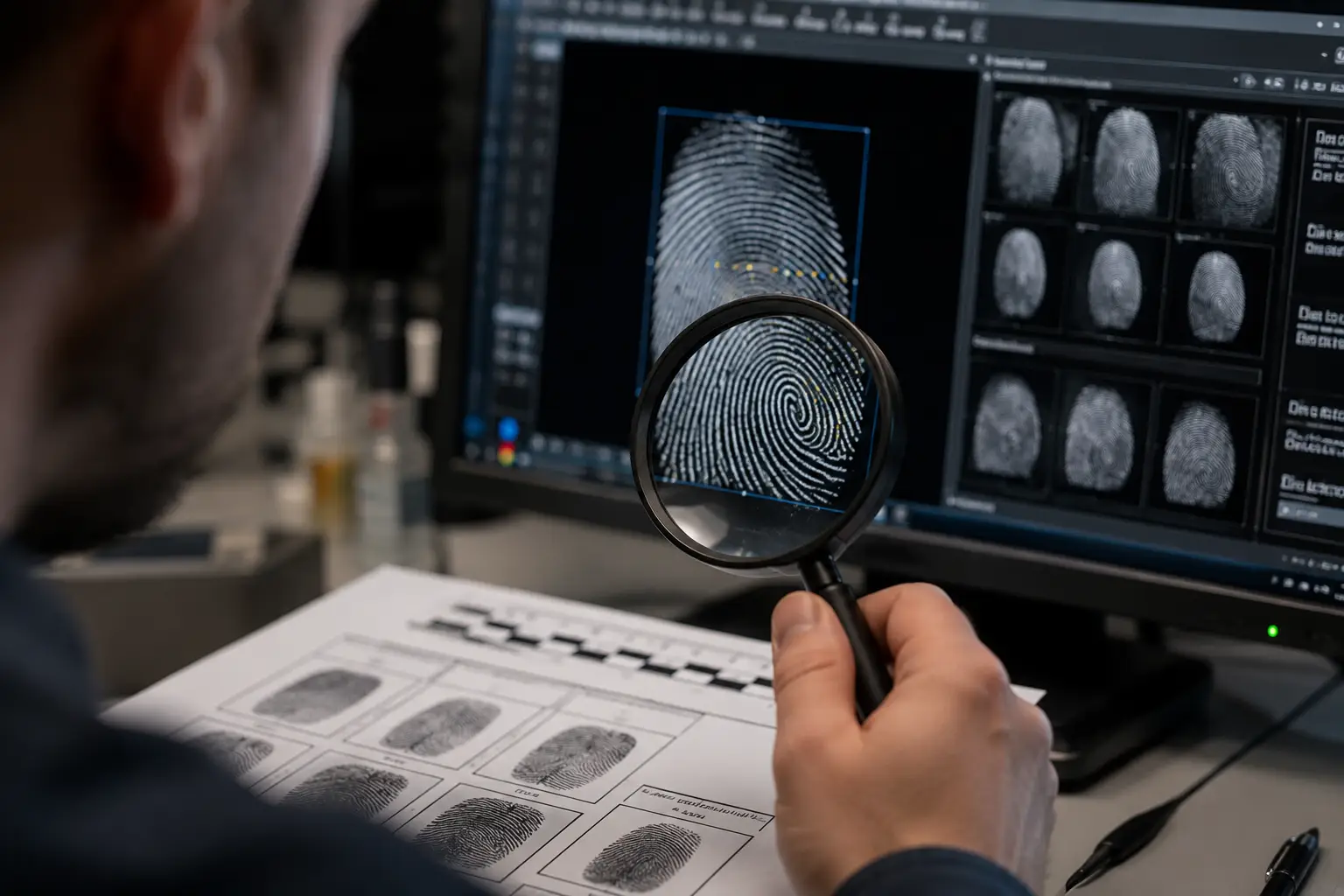
5. Fingerprint Analysis
The developed or recovered impression is examined for the quality and continuity of its ridge detail and other observable characteristics.
The examination considers whether the impression contains sufficient information for comparison and whether the available features can be reliably evaluated.
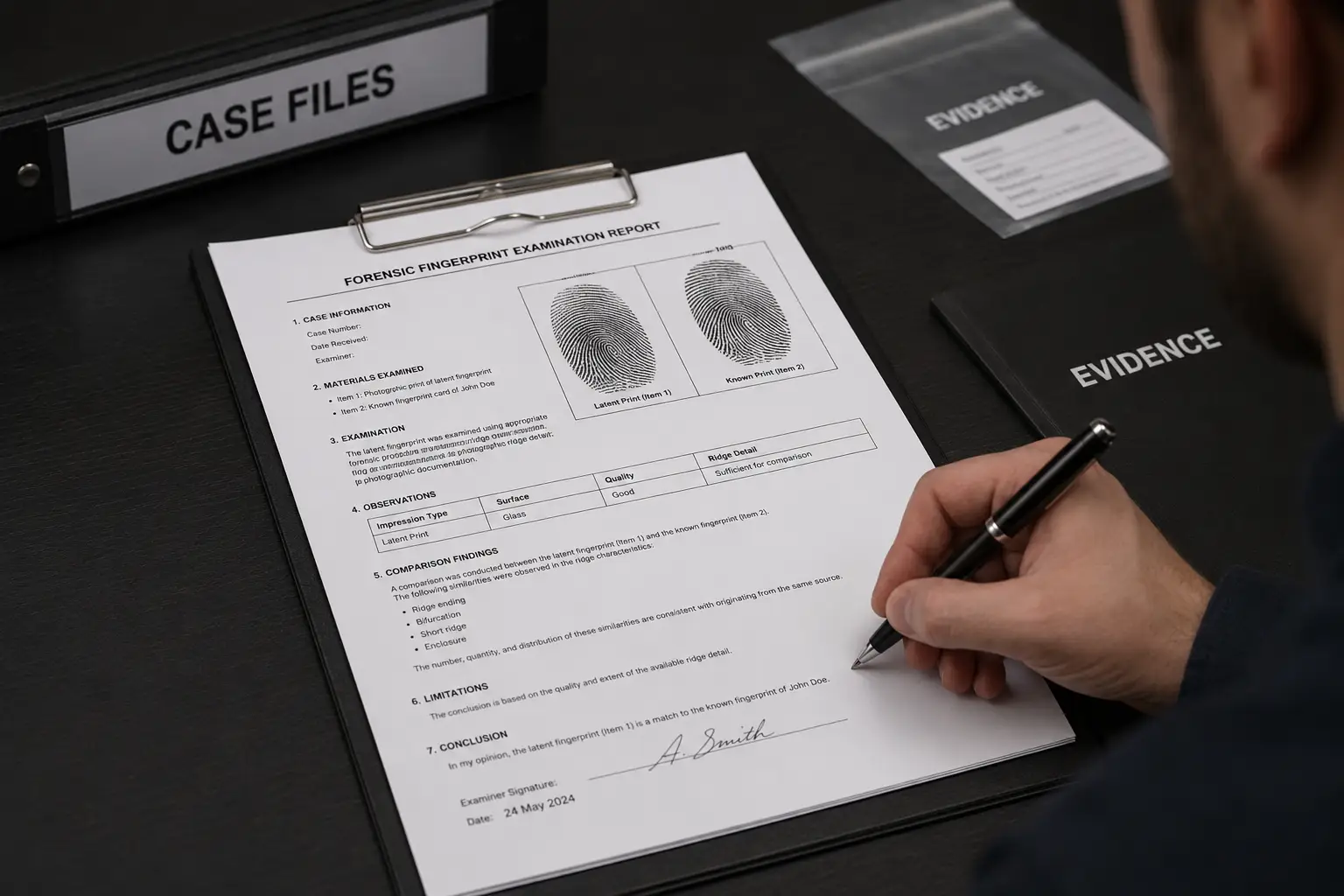
6. Forensic Reporting
Following the examination, findings can be documented in a professional forensic report. The report may describe the material examined, examination undertaken, observations, comparison findings, limitations, and the conclusion supported by the available evidence.
Where Fingerprint Analysis Can Help
Fingerprint examination may be relevant in a variety of investigative and legal situations.
Theft & Burglary Investigations
Fingerprint evidence recovered from doors, windows, furniture, containers, vehicles, safes, or other relevant surfaces may provide useful investigative information in suspected theft or burglary cases.
Robbery & Criminal Investigations
Where suitable fingerprint evidence is recovered during a criminal investigation, forensic examination may assist in evaluating whether an impression contains information suitable for comparison.
Property & Unauthorized Access Cases
Fingerprint evidence may be relevant where there are questions concerning access to a property, office, warehouse, vehicle, restricted area, or other location.
Disputed Fingerprint Evidence
Where fingerprint evidence has already been recovered or presented as part of a case, an independent forensic examination may assist in evaluating the quality and available characteristics of the impression.
Corporate & Internal Investigations
Organizations dealing with suspected theft, unauthorized access, missing assets, or workplace incidents may require forensic examination of physical evidence. Fingerprint analysis can form one component of a broader investigation where appropriate.
Types of Evidence That May Contain Fingerprints
Depending on the circumstances, fingerprints may potentially be encountered on a wide variety of surfaces and objects.
These may include glass, metal, plastic, paper, documents, doors, windows, furniture, electronic devices, containers, vehicles, tools, packaging materials, and other smooth or suitable surfaces.
The ability to develop or examine a fingerprint depends on several factors, including the surface, environmental conditions, handling history, age and condition of the impression, and the amount of ridge detail that remains available.
Latent Fingerprints vs. Visible Fingerprints
Not all fingerprints are visible in the same way.
Latent fingerprints are impressions that generally require forensic development or specialized examination to become sufficiently visible for documentation and analysis.
Visible or patent fingerprints may be readily observable because the finger has transferred a visible substance onto a surface.
There can also be impressions that are physically present but unsuitable for comparison because the available ridge detail is incomplete, distorted, smudged, or otherwise insufficient.
For this reason, the presence of a fingerprint does not automatically mean that it can be identified. A professional assessment is necessary to determine whether the available evidence supports meaningful examination.
Why Proper Fingerprint Examination Matters
Fingerprint evidence can be highly valuable, but its usefulness depends heavily on the quality and integrity of the evidence.
Improper handling, contamination, poor documentation, excessive processing, unsuitable collection methods, or low-quality images can affect the amount of information available for examination.
Our approach emphasizes scientific examination, careful documentation, evidence-based interpretation, and professional reporting rather than assumptions based solely on visual similarity.
Why Choose Clarivue Forensics?
Scientific & Evidence-Based Approach
Our examinations are based on systematic forensic assessment and evidence rather than assumptions or unsupported conclusions.
Experienced Forensic Professionals
Clarivue Forensics brings together forensic professionals, consultants, legal advisors, and specialists with experience across forensic science, investigation, law, medicine, academics, and research. The organization’s existing profile highlights a multidisciplinary approach to forensic and investigative matters.
Attention to Detail
Fingerprint examination requires careful attention to ridge detail, image quality, evidence condition, documentation, and comparison methodology. We approach each assignment according to the characteristics of the evidence provided.
Confidential Case Handling
Forensic matters may involve sensitive personal, business, criminal, or legal information. We aim to maintain professional and confidential handling of case information throughout the engagement.
Professional Forensic Reporting
Our findings are documented in a structured manner so that the observations and conclusions can be understood by clients, investigators, advocates, and other relevant professionals.
What is fingerprint development?
Fingerprint development is the forensic process of making potentially invisible or difficult-to-see fingerprint impressions sufficiently visible for documentation and examination, where technically appropriate.
What is fingerprint analysis?
Fingerprint analysis involves the examination of a fingerprint impression to evaluate its quality, ridge detail, and other characteristics and, where appropriate, compare it with a known fingerprint standard.
Can every fingerprint be identified?
No. A fingerprint may be too incomplete, smudged, distorted, damaged, or otherwise lacking sufficient ridge detail for a meaningful comparison. The suitability of an impression must be assessed based on the actual evidence.
Can you examine fingerprints already recovered from a crime scene?
Yes, depending on the material available. Previously recovered fingerprint impressions, photographs, lifts, or other documentation may be submitted for forensic examination and assessment.
Do you need a known fingerprint sample for comparison?
A known fingerprint standard is generally necessary when the objective is to compare a questioned impression with a particular individual. However, an examination can also assess the quality and suitability of a recovered impression even when a known standard is not immediately available.
Can fingerprints be recovered from glass or metal surfaces?
Certain surfaces may be suitable for fingerprint development, but the success of development depends on factors such as surface characteristics, environmental exposure, handling, and the condition of the impression.
Can fingerprint evidence be used in a theft investigation?
Yes. Fingerprints may be one form of physical evidence considered during a theft investigation, particularly where an individual may have touched relevant objects or surfaces. Fingerprint evidence should generally be considered alongside other available evidence.
Can you provide a forensic report?
Where an examination is undertaken, findings can be documented in a professional forensic report describing the material examined, examination process, observations, limitations, and conclusions supported by the available evidence.
How should I preserve fingerprint evidence?
Avoid touching, cleaning, wiping, moving, or unnecessarily handling the suspected evidence. Where possible, preserve the original condition of the material and seek professional forensic guidance regarding appropriate collection and preservation.
Need Professional Fingerprint Examination?
When fingerprint evidence is properly developed, documented, collected, preserved, and examined, it can provide valuable information for an investigation. Our team can help assess the available evidence and determine the appropriate forensic examination approach.
Whether you require latent fingerprint development, fingerprint comparison, examination of recovered impressions, crime scene fingerprint support, or an independent forensic assessment, Clarivue Forensics can provide professional forensic consultation based on the circumstances and evidence available.
When facts matter, scientific evidence matters.
Contact Clarivue Forensics Private Limited to discuss your fingerprint evidence and forensic requirements.
Request a Forensic Consultation
Speak with our forensic professionals to understand whether your fingerprint evidence is suitable for development, examination, comparison, or further forensic assessment.
Fingerprint Development & Analysis in Delhi NCR
Delhi | Central Delhi | East Delhi | New Delhi | North Delhi | North East Delhi | North West Delhi | South Delhi | South East Delhi | South West Delhi | West Delhi | Gurugram | Faridabad | Nuh | Rohtak | Sonipat | Rewari | Jhajjar | Panipat | Palwal | Bhiwani | Charkhi Dadri | Mahendragarh | Jind | Karnal | Ghaziabad | Gautam Buddh Nagar | Noida | Greater Noida | Meerut | Bulandshahr | Baghpat | Hapur | Muzaffarnagar | Shamli | Alwar | Bharatpur
Fingerprint Development & Analysis in Delhi NCR
Delhi | New Delhi | Mumbai | Navi Mumbai | Thane | Pune | Nagpur | Nashik | Aurangabad | Kolhapur | Solapur | Amravati | Mumbai | Ahmedabad | Surat | Vadodara | Rajkot | Bhavnagar | Jamnagar | Gandhinagar | Jaipur | Jodhpur | Kota | Bikaner | Ajmer | Udaipur | Alwar | Lucknow | Kanpur | Agra | Varanasi | Prayagraj | Ghaziabad | Noida | Greater Noida | Meerut | Bareilly | Moradabad | Gorakhpur | Mathura | Firozabad | Saharanpur | Muzaffarnagar | Gurugram | Faridabad | Panipat | Sonipat | Rohtak | Hisar | Karnal | Ambala | Chandigarh | Amritsar | Ludhiana | Jalandhar | Patiala | Bathinda | Srinagar | Jammu | Dehradun | Haridwar | Rishikesh | Haldwani | Nainital | Bengaluru | Mysuru | Mangaluru | Hubli-Dharwad | Belagavi | Ballari | Chennai | Coimbatore | Madurai | Tiruchirappalli | Salem | Tiruppur | Erode | Hyderabad | Warangal | Nizamabad | Karimnagar | Vijayawada | Visakhapatnam | Guntur | Nellore | Tirupati | Kurnool | Kochi | Thiruvananthapuram | Kozhikode | Thrissur | Kollam | Kannur | Kolkata | Howrah | Durgapur | Siliguri | Asansol | Patna | Gaya | Muzaffarpur | Bhagalpur | Ranchi | Jamshedpur | Dhanbad | Bokaro | Bhubaneswar | Cuttack | Rourkela | Guwahati | Shillong | Imphal | Agartala | Aizawl | Gangtok | Itanagar | Raipur | Bilaspur | Durg | Bhilai | Bhopal | Indore | Gwalior | Jabalpur | Ujjain | Sagar | Vadodara | Panaji | Margao | Port Blair