+
CHANDIGARH, PUNJAB, AND HARYANA

THEFT CASE INVESTIGATION

Theft can result in significant financial loss, disruption to business or personal affairs, and uncertainty about how the incident occurred. Whether the matter involves cash, valuables, documents, electronic devices, business assets, equipment, or other property, identifying the circumstances surrounding the incident often requires careful examination of the valuable evidence.

Theft Case Investigation involves a systematic and evidence-based assessment of information and material connected with a suspected theft. The process may include examining the incident circumstances, available physical evidence, CCTV footage, documents, digital information, photographs, records, and other relevant material to identify facts that may assist in understanding the incident.

A proper investigation focuses on what happened, when and where it may have occurred, what evidence is available, and whether the available material supports or contradicts relevant circumstances. Depending on the nature of the matter, forensic examination may assist in identifying relevant evidence, establishing connections between evidence and the incident, and documenting findings in a clear and objective manner.

At Clarivue Forensics, we approach theft-related matters with an emphasis on scientific examination, proper evidence documentation, and responsible interpretation. Each case is assessed according to its individual circumstances, the type and condition of available evidence, and the scope of examination required.

Our objective is not to make assumptions or reach conclusions beyond the available evidence, but to provide clear, objective, and professionally documented forensic findings that may assist clients, legal, professionals, businesses, and investigating authorities in understanding theft-related matters and taking appropriate further action.

Theft Case Investigation Services

CRIME SCENE EVIDENCE EXAMINATION

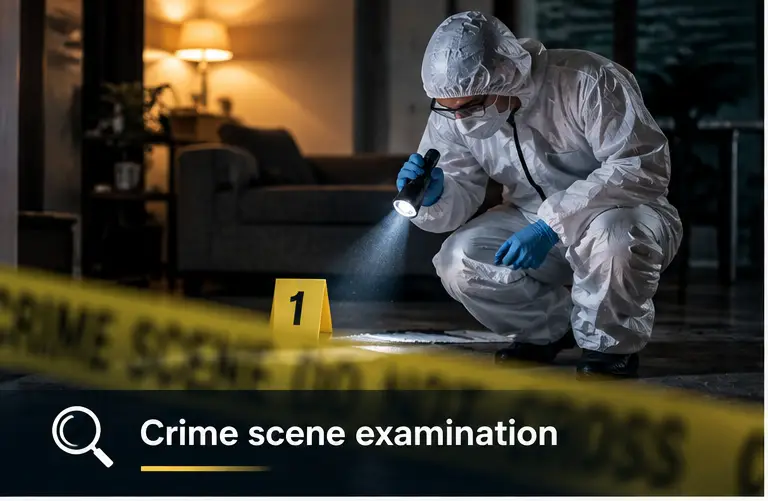
Crime scene evidence examination involves the systematic assessment and documentation of physical evidence associated with a suspected theft or other incident. The examination may include relevant objects, surfaces, marks, entry or exit points, disturbed areas, and other material that could assist in understanding the circumstances of the incident. Evidence is assessed based on its condition, relevance, and suitability for forensic examination, with appropriate documentation and scientific methods used wherever applicable. The findings are presented objectively, along with relevant limitations, to support further investigation or legal proceedings.

FINGERPRINT EXAMINATION

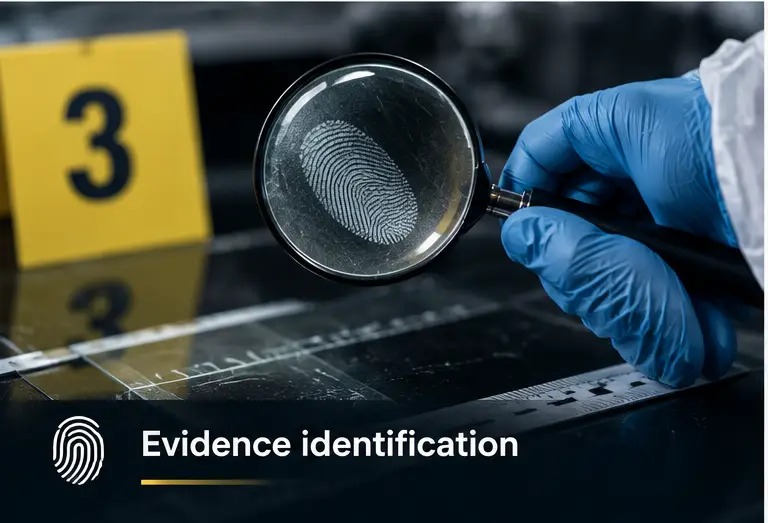
Fingerprint examination involves the detection, development, documentation, and comparison of latent or visible fingerprints found on relevant objects and surfaces associated with a case. Depending on the nature and condition of the surface, appropriate forensic techniques may be used to identify ridge patterns and other characteristics suitable for comparison with known or reference prints. The examination can assist in determining whether a fingerprint is suitable for comparison and whether it shows sufficient correspondence with a reference print. Findings are documented objectively, with conclusions based on the quality and quantity of available fingerprint detail and the limitations of the evidence.

CCTV AND VIDEO EVIDENCE EXAMINATION

CCTV and video evidence examination can provide important information about events surroundings a theft or other incident. CCTV and Video Evidence Examination involves the systematic review and analysis of available video recordings to identify relevant activities, movements, individuals, objects, vehicles, and sequences of events. The examination may include reviewing footage from multiple cameras, assessing timestamps and continuity, extracting relevant segments, and improving the visibility of suitable footage where technically feasible. Findings are documented objectively, with attention to the quality, completeness, authenticity, and limitations of the available recording.

DIGITAL EVIDENCE EXAMINATION

Digital evidence can play an important role in theft investigations, particularly where computers, mobile devices, storage media, online accounts, or electronic records are involved. Digital Evidence Examination involves the systematic examination of relevant digital data to identify information that may assist in understanding the circumstances of an incident. Depending on the device and available data, examination may include files, photographs, videos, messages, emails, application data, system records, timestamps, and other relevant digital information. The process focuses on preserving the integrity of the available evidence, documenting examination procedures, and presenting relevant findings in a clear and objective manner, subject to lawful access and technical feasibility.

DOCUMENT AND RECORD EXAMINATION

Documents and records can provide important information in theft-related cases, particularly where financial transactions, inventory, ownership, or business activities are involved. Document and Record Examination involves the systematic examination of relevant documents to identify alterations, inconsistencies, missing entries, additions, overwriting, or other features that may require forensic assessment. Depending on the nature of the material, the examination may include handwriting and signature comparison, ink and document assessment, sequence of entries, and examination of relevant records such as invoices, receipts, registers, agreements, vouchers, or financial documents. Findings are documented objectively and interpreted within the limitations of the available material.

STOLEN PROPERTY AND ASSET DOCUMENTATION

Proper documentation of stolen or missing property can help establish the identity, description, ownership, and relevant details of assets involved in a theft case. Stolen Property and Asset Documentation involves systematically recording available information about valuables, equipment, electronic devices, documents, business assets, and other missing property. This may include photographs, identifying marks, serial numbers, model details, purchase records, invoices, ownership documents, and other supporting information. The collected material can help in comparing recovered property with available records and provide a clear documentary basis for further investigation or legal proceedings.

EVIDENCE COLLECTION AND DOCUMENTATION

Proper collection and documentation of evidence are essential for maintaining its integrity and usefulness during a theft investigation. Evidence Collection And Documentation involves identifying relevant physical, documentary, digital, and other relevant details. Where appropriate, evidence may be photographed, labelled, documented, and preserved using suitable procedures to reduce the risk of contamination, loss, or alteration. Accurate documentation creates a clear record of the material examined and supports subsequent forensic analysis, investigation, or legal proceedings.

EVIDENCE ANALYSIS AND CORRELATION

Evidence Analysis and Correlation involves the systematic examination and comparison of different pieces of evidence connected with a theft or other investigation. Physical, documentary, digital, photographic, CCTV, and other relevant evidence may be assessed individually and then considered together to identify possible links, consistencies, discrepancies, or relevant patterns.

The process may involve comparing information such as timestamps, locations, identifying characteristics, records, recovered items, and other available evidence to develop a clearer understanding of the circumstances surrounding an incident. At Clarivue Forensics, findings are based on the material available for examination and are reported objectively, without extending conclusions beyond what the evidence can responsibly support.

DIGITAL AND ELECTRONIC RECORD REVIEW

Digital and electronic records can provide valuable information in theft-related investigations and disputes. Digital and Electronic Record Review involves the systematic examination or relevant electronic information, such as emails, messages, call records, transaction records, files, photographs, videos, access logs, and other available digital records. The review may focus on identifying relevant dates, activities, communications, or connections that can help clarify the circumstances of an incident. At Clarivue forensics, digital records are assessed and documented objectively, subject to the availability, integrity, lawful access, and technical suitability of the information for examination.

FORENSIC PHOTOGRAPHY AND DOCUMENTATION

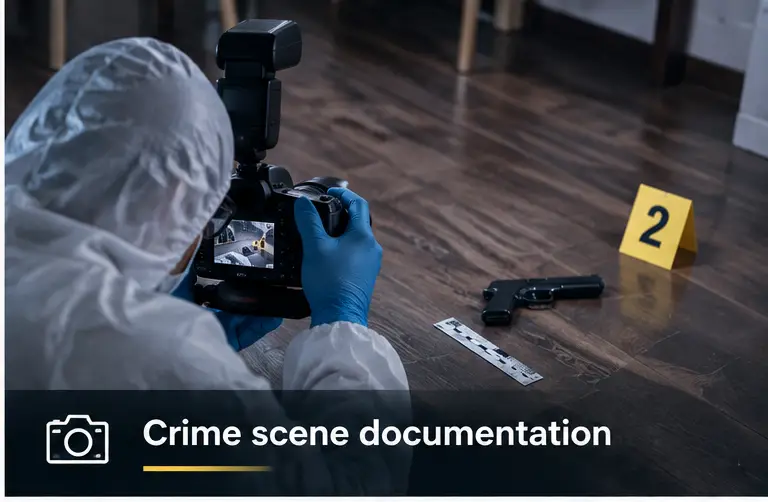
Forensic Photography and Documentation involves the systematic photographic recording and documentation of a crime scene, evidence, objects, property, marks, damage, and other relevant conditions associated with an incident. Photographs may be taken to capture the overall scene as well as specific details that may be relevant for subsequent examination or investigation. Proper documentation may include recording the location, condition, identifying features, and other relevant observations associated with the evidence. The objective is to create a clear and reliable visual record that can support forensic examination, investigation, reporting, and legal proceedings.

THEFT RELATED DOCUMENT FORGERY EXAMINATION

Suspected forged or altered documents can play an important role in theft and financial disputes. Our examination assesses signatures, handwriting, alterations, overwriting, erasures, and other signs of document manipulation using appropriate forensic methods. Findings are clearly documented to help assess document authenticity and support investigative and legal proceedings.

FORNSIC REPORT AND EXPERT OPINION

A clear forensic report helps turn examination findings into understandable, documented evidence. Forensic Report and Expert Opinion provides an objective summary of the material examined, methods used, observations, findings, and relevant limitations. Where required and appropriate, expert assistance may also be provided for legal proceedings, case review, and explanation of forensic findings.

LEGAL AND INVESTIGATIVE ASSISTANCE

Forensic findings can provide valuable support during legal and investigative matters. Our Legal and Investigative Assistance helps clients and legal professionals understand relevant evidence, examination findings, and their limitations. We may assist with case assessment, forensic documentation, report interpretation, and expert consulatation to support informed legal or investigative decisions.

ABOUT US

At Clarivue Forensics, we provide scientific and evidence-focused forensic services to help clients better understand theft-related incidents and disputes. Our approach combines careful examination, systematic documentation, and objective interpretation of available physical, documentary, digital, and other relevant evidence.

We understand that a theft can involve significant financial loss, uncertainty, and legal concerns. That is why we focus on examining the available evidence carefully rather than relying on assumptions. Depending on the nature of the matter, our services may include crime scene evidence examination, fingerprint examination, CCTV and video analysis, digital evidence examination, document examination, evidence documentation, and forensic reporting.

Our objective is to provide clear, reliable, and professionally documented findings within the scope and limitations of the evidence available, supporting clients, legal professionals, businesses, and investigative authorities in making informed decisions.

WHY CHOOSE US

When a theft occurs, you need facts – not assumptions. At Clarivue Forensics, we focus on careful evidence examination and clear documentation to help you understand the circumstances of a theft-related matter.

Evidence-Based Approach

Findings are based on the evidence available for examination.

Professional Forensic Examination

Systematic assessment using appropriate forensic methods.

Multiple Evidence Types

Physical, digital, documentary, CCTV, fingerprint, and other relevant evidence can be considered.

Clear Reporting

Findings and relevant limitations are presented in a clear and understandable manner.

Objective and Confidential

We maintain a professional approach with appropriate confidentiality.

Legal and Investigative Support

Forensic findings can assist clients and legal professionals in understanding evidence and making informed decisions.

Our Theft Case Investigation Process

Service FAQ

Q1: What is a theft case investigation?

A theft case investigation involves the systematic examination of available evidence to understand the circumstances of a suspected theft and identify information that may assist the investigation.

Q2: What types of evidence can be examined in a theft case?

Depending on the case, relevant evidence may include CCTV footage, fingerprints, documents, digital records, photographs, physical objects, receipts, involves, and other related material.

Q3: Can CCTV footage be examined in a theft case?

Yes. Available CCTV footage can be reviewed to identify relevant movements, activities, individuals, objects, vehicles, and sequences of events, subject to the quality and completeness of the recording.

Q4: Can fingerprints be examined from a theft scene?

Yes, where suitable surfaces and usable fingerprint impressions are available. The possibility of examination depends on factors such as the surface, condition, and quality of the print.

Q5: Can deleted digital evidence be recovered?

Recovery may be possible in some circumstances, depending on the device, type of data, condition of the storage media, and other technical factors. Recovery cannot be guaranteed in every case.

Q6: Can documents related to a theft be examined?

Yes. Documents such as cheques, invoices, receipts, agreements, registers, vouchers, and other records may be examined for suspected forgery, alteration, overwriting, or other irregularities.

Q7: Can stolen property be identified through forensic examination?

Forensic examination may assist in documenting and comparing identifying features such as serial numbers, model details, unique markings, photographs, and supporting ownership records, where such information is available.

Q8: Is a forensic report useful in legal proceedings?

A professionally prepared forensic report can document the material examined, methodology, observations, findings, and limitations. Its relevance and evidentiary value depend on the circumstances of the particular case and applicable legal requirements.

Q9: Can Clarivue Forensics identify who committed the theft?

Forensic examination generally focuses on evidence and findings rather than making unsupported allegations about a particular person. Whether evidence identifies or links an individual depends on the nature, quality, and availability of the evidence.

Q10: What information is required to begin a theft case examination?

Typically, relevant details about the incident and the available evidence are required, including the nature of the theft, date and location, photographs or CCTV footage, documents, digital material, and other relevant information. The specific requirements depend on the case.

Theft Case Investigation services keywords to reach us in Chandigarh, India

Theft Case Investigation Services
Theft Case Evidence Examination
Theft Case Forensic Services
Fingerprint Examination for Theft Cases
Theft Document Forgery Examination

Theft Investigation Expert
Theft Investigation Services in India
Crime Scene Evidence Examination
Digital Evidence Examination
Forensic Evidence Collection

Forensic Theft Investigation
Theft Evidence Analysis
CCTV Evidence Examination
Forensic Evidence Documentation
Forensic Report and Expert Opinion

Theft Case Investigation – Service Areas

Chandigarh & Tricity

Chandigarh • Mohali • New Chandigarh • Zirakpur • Kharar • Panchkula

Punjab

Barnala • Bathinda • Faridkot • Fatehgarh Sahib • Fazilka • Ferozepur • Gurdaspur • Hoshiarpur • Jalandhar • Kapurthala • Ludhiana • Rupnagar • Mansa • Moga • Pathankot • Patiala • Sangrur • Nawanshahr • Sri Muktsar Sahib • Tarn Taran • Malerkotla

Haryana

Ambala City • Ambala Cantt • Panipat • Hisar • Sonipat • Karnal • Jind • Rohtak • Kurukshetra • Yamunanagar • Gurugram • Palwal • Faridabad • Nuh • Mahendragarh • Rewari • Fatehabad • Sirsa • Bhiwani • Charkhi Dadri • Jhajjar • Kaithal