Insects as Evidence: The Science of Forensic Entomology
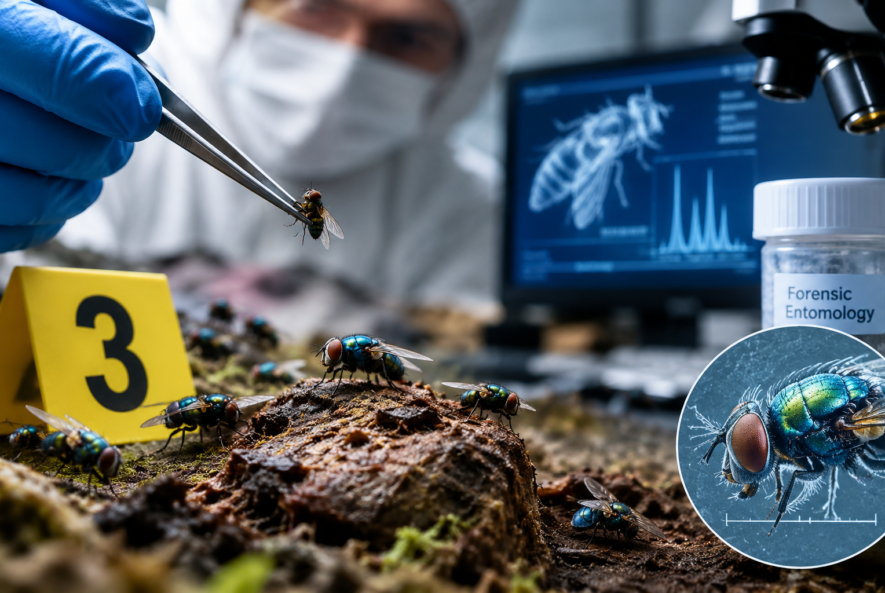
Within minutes of death, the first witnesses are there, before the first human investigator arrives. Flies. Not glamorous, not dramatic, but very accurate. But forensic entomology—the use of insects to help solve crimes—has turned these pests into some of the most reliable clocks in forensic science.
How come insects come so fast
Blowflies can smell the odor of decomposition within minutes of death, sometimes before there is any visible sign of decay. They lay eggs almost immediately, usually in moist areas such as the eyes, nose, mouth and open wounds. This isn’t random; it’s predictable biology. And that’s exactly why it’s useful in an investigation.
How Insects Help Estimate Time of Death
1. The Insect Life Cycle as a Clock
Flies progress through well-documented developmental stages — egg, larva (maggot), pupa, adult — and each stage takes a predictable amount of time depending on species and temperature. By identifying which stage of development the insects on a body have reached, entomologists can work backward to estimate a Post-Mortem Interval (PMI) — how long the person has been dead.
2. Temperature-Dependent Growth
Insect development speeds up in heat and slows down in cold, so entomologists factor in local weather data — temperature logs from the days surrounding death — to calibrate their estimates. A body found in summer heat will show much faster insect development than one found in a cold winter environment, even after the same number of days.
3. Succession Patterns
Different insect species arrive at a body in a predictable sequence over time — blowflies first, followed later by beetles and other species that prefer more advanced stages of decomposition. Because this succession pattern is well documented, the combination of species present can help estimate PMI even weeks or months after death, long after the first insects have moved on.
Beyond Time of Death
Forensic entomology isn't limited to figuring out when someone died. It can also reveal:
Whether a body was moved. Insect species vary by environment — a body found indoors but showing insect activity typical of an outdoor species suggests it was killed or left somewhere else first.
Drug and toxin presence. Maggots feeding on a body absorb whatever substances were in the tissue. Toxicology tests run on the insects themselves — a technique called entomotoxicology — can reveal drugs or poisons even when the body has decomposed too much for traditional tissue testing.
Signs of neglect or abuse in the living. In some cases, insect activity around wounds on a living but neglected .
Real Cases That Used Insect Evidence
Forensic entomology has been applied in cases where the body was too decomposed for standard techniques to be used for determining time of death. In many documented investigations, insect evidence has been the key element that either corroborated or totally debunked a suspect’s alibi – because unlike testimony, insects don’t change their story.
The Boundaries of Science
Entomological evidence is not foolproof. Factors such as wrapping of the body or burial (which delays insect access), extreme temperatures, insecticide exposure or indoor vs outdoor placement can skew results. That is why forensic entomologists tend to work side-by-side with pathologists, using insect evidence alongside other clues as to when a person died rather than relying on it by itself.
The Takeaway
Insects are too easily written off as background noise at a crime scene, a side effect of decomposition more unwelcome than evidence in their own right. But to a forensic entomologist, every maggot and every fly is a precisely timed biological process, quietly recording details that no human witness stuck around long enough to see.